
 Trip planning
2026.11 Furano, Hokkaido Notes for planning
Stay a night in Furano and take a morning walk by the fields
How many days in Furano: choosing, where to stay, where to walk at dawn

To stand by the fields at dawn,
you stay the night before.
The roads are still quiet.
The mountains cast long shadows.
This is the Furano day trips miss.
How many days in Furano: day trip, 1 night or 2?
Start with the moment you most want.
A day: a quick look
One or two places
Easier from Asahikawa than from Sapporo. No morning, and no late evening.
How much of a day tour is spent on the bus →1 night: best for a first visit
An evening and a morning more
Stay in one town and focus on that side, with a stop or two in the other on the way back.
2 nights: to see both towns
A day each in Furano and Biei
The towns are about 40 minutes apart. Allow this much in winter or without a car, too.
A week or more: closer to the fields
Living, as well as travelling
Time for a farm experience too. For a whole season of work you first need a visa that allows it.
Choosing a farm experience →A morning walk in Furano: where to go
Light at 4 in July, at 7 in December. Walk once it is fully light.
- In Biei
- About 30 minutes on foot from the station to Hokusei-no-oka Observation Park, for hills and fields
- In Kamifurano
- About 15 minutes on foot from the station to Hinode Park, full of flowers in summer
- In Furano
- Asahigaoka Park, called Namako-yama by locals: the top looks over the basin and the Tokachi mountains. About 10 minutes by car from the station. By bus, get off at Kisen and walk 5 minutes, but there are usually no buses at dawn
- In winter
- No need to go far: watch from the side of a cleared road near where you stay. Don’t climb without snowshoes
- First
- Watch from pavements, safe roadsides or parks, mind cars and snowploughs, and never enter a field. Bears move at dawn: walk in company once it is fully light, and skip it if bears were seen nearby recently: recent sightings and how to avoid bears →
Furano mornings, from people who waited for them
The good part is shorter than you think.
A landscape photographer waits in a car park while it is still dark. After many visits, with cloud too thick or too thin, the sun finally turned the sea of cloud gold. In roughly 10 to 20 minutes it was an ordinary morning again.
On the road from Nakafurano to Furano, another local record describes a dawn just before the traditional first day of spring in early February: riverside trees white with frozen fog, slowly lighting up after sunrise. It belongs to very cold mornings only, and is gone when the day warms.
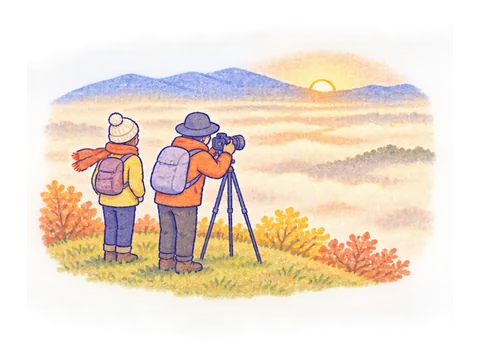
Stay a night, and you have a chance at those ten minutes.
Based on a landscape photographer’s record (2024, Japanese) / Furano tourism stories (2019, Japanese)
Where to stay in Furano: station, Kitanomine, the Prince or Biei
Choose by where you want to be next morning.
- Furano Station
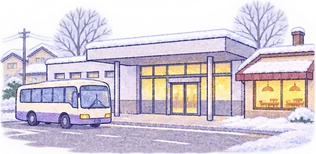
- First choice without a car: close to buses, trains, food and shops
- Kitanomine
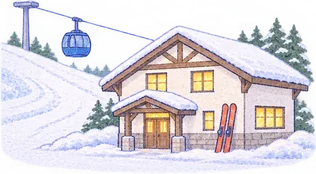
- Skiing or a longer stay: walk to the Kitanomine gondola. Few evening buses back to the station
- Shin Furano Prince
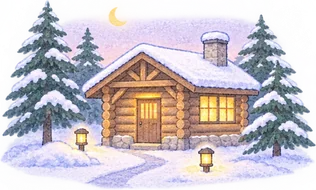
- For the forest at night: next to Ningle Terrace. The last winter bus to the station is at 15:55
- Biei Station
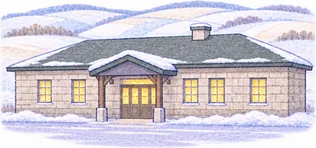
- Hills and the Blue Pond: walk to a viewpoint in the morning, and the pond’s evening lights are near
- When booking
- Since April 2026, stays in Furano city carry lodging tax (Hokkaido and city combined): when the room charge per person per night is under 20,000 yen you pay 300 yen, from 20,000 to under 50,000 it is 500, from 50,000 it is 1,000. Biei, Kami-Furano and Naka-Furano charge only the Hokkaido tax of 100, 200 or 500 yen (city and Hokkaido figures)
A 2-day summer itinerary
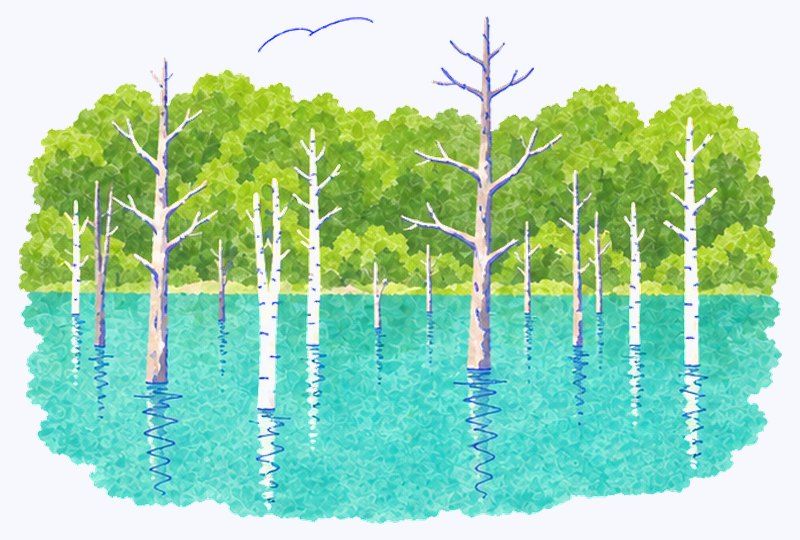
Morning from Sapporo or Asahikawa → midday at Farm Tomita in Nakafurano Map (about 15 min by car from Furano Station) → afternoon chairlift over the fields at Hokuseiyama Lavender Garden Map → stay overnight in Furano or Biei
Suggested time: Farm Tomita 1–1.5 hours, Hokuseiyama 30–45 min (with the lift).
Morning at Hinode Park Map (Kamifurano, about 20 min by car) → to Biei: first Shin’ei-no-oka Observation Park Map, then north to Hokusei-no-oka Observation Park Map → afternoon back to Asahikawa or Sapporo
Suggested time: Hinode Park 30 min, each viewpoint 20–30 min. In July, sunrise in Furano is about 4:00 and sunset about 19:10; morning and evening light is best.
Day 1: Lavender Bus from Asahikawa Airport to Nakafurano → walk about 10 min to Hokuseiyama → stay in Furano (leave Farm Tomita for the bus on day 2).
Day 2: an early walk near your lodging, then the 10:15 Biei-go sightseeing bus from Furano Station (summer, book ahead): Farm Tomita → Hokusei-no-oka (20 min) → Shikisai-no-oka → Blue Pond → Shirahige Falls → Biei Station 16:50, Furano Station 17:35. Don’t book a flight that evening: the last bus from Biei to the airport leaves at 16:59 and does not wait for connections.
Driving times are approximate (Furano Tourism Association). In flower season, expect to queue for parking anywhere.
A 2-day winter itinerary without a car
Snow by day, lights after dark.

10:37 Lavender Bus from Asahikawa Airport → 10:52 Biei Station. Have lunch and leave bags (paid service at the tourist office)
→ 13:20 round-trip bus to the Christmas Tree, back at the station 14:20
→ 14:52 Lavender Bus → 15:55 Shin Furano Prince Hotel
→ After dark, Ningle Terrace (winter hours 12:00–20:45); stay nearby
It gets light around 7:00: take a short walk along the side of a cleared road near your lodging, then keep some time for a hot spring
→ 10:30 bus from the Prince Hotel, at the airport 11:53; or 13:20 bus, at the airport 14:43
Buses run late in snow and don’t wait for flights: choose a later flight.
Valid 1 December 2026 to 28 February 2027; no round-trip bus 31 December to 5 January. The round-trip bus costs from 2,000 yen per adult. Book at least 2 days ahead, with same-day tickets only if seats remain. Lavender Bus times are from the timetable of 1 April 2026; check again before you go.
For the Blue Pond lights, stay in Biei instead. On Fridays and Saturdays a Biei View Bus leaves at 16:35 (20 November to 13 February, not 1 or 2 January). On other days until the end of February, the local bus works: the last one leaves the pond at 18:05. There is no blue water in winter; you go for the lights.
Furano 2 days, 1 night: what to book first
Follow this order and it falls into place.
- 1 Dates
- For flowers, see which week blooms; in winter, see which days have events
- 2 A room
- Pick a side from the list above. In July and the ski season, book it before transport
- 3 Transport
- Without a car, check trains and buses and write down the last one
- 4 Activities
- Book experiences and sightseeing buses. With one night, take a later flight home; for a balloon or a spare morning, stay two
Travel times and reaching Furano without a car
How long it takes to reach Furano
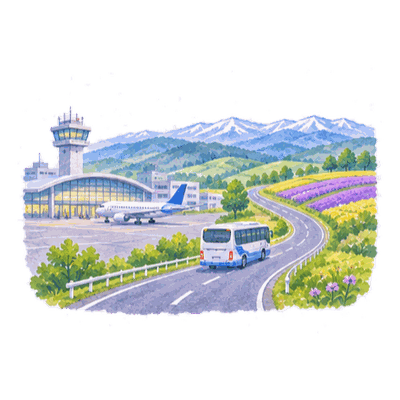
| Sapporo | About 2 hr 10 min to Furano |
| New Chitose Airport | About 2 hr 10 min |
| Asahikawa Airport | About 1 hour (the nearest airport; from overseas, usually reached by a connecting flight) |
| Asahikawa | About 1 hr 20 min |
| Furano↔Biei | About 40 min (car or JR Furano Line) |
Apart from JR, these are rough summer driving times without breaks (Furano Tourism Association). Allow more on winter roads.
A day trip from Sapporo means over 4 hours of travel. Add Biei and it is over 1 hour more.
How to reach Furano without a car
Sapporo
How to get thereJR: limited express to Takikawa (about 55 min), then a local train (about 1 hr to 1 hr 10 min). In summer there is the direct Furano Lavender Express, reserved seats only in 2026 (Sapporo 7:41→Furano 9:44; JR pages disagree on online booking from overseas)
Time and fareAbout 2–2.5 hours
Sapporo
How to get thereKosoku Furano-go highway bus, 7 a day from outside Sapporo Station (summer 2026; winter times announced separately)
Time and fareAbout 2 hr 35–55 min, 2,700 yen
Asahikawa Airport
How to get thereLavender Bus, no booking, pay as you get off, 7 a day
Time and fareAbout 1 hour to Furano, 790 yen; about 15 min to Biei Station, 380 yen
Asahikawa
How to get thereJR Furano Line (via Biei)
Time and fareAsahikawa–Furano 1,380 yen; Asahikawa–Biei 680 yen
The hills of Biei
How to get thereThe summer Biei-go sightseeing bus (book ahead), or rent an e-bike at Biei Station
Time and fareSightseeing bus 9,000 yen (including Shikisai-no-oka); ordinary bikes from about 600 yen for 1 hour, e-bikes more
Bus fares are as of October 2025. A rise for the Lavender Bus from 1 December 2026 has been applied for (e.g. Asahikawa Station–Furano Station 900→1,000 yen, not yet approved). The direct express from Sapporo is 5,440 yen full fare (2026); check fares for connecting trains with JR Hokkaido.
Without a car, stay near Furano or Biei Station and link the fields and hills by bus, sightseeing bus or bicycle.
Staying longer: farm experiences, farmstays, a season
How many days for a farm experience

Farm experiences in Biei
How longHalf a day
What it isField-path walks, picking asparagus or corn, about 6,000 yen each (compiled by the Hokkaido government)
Farmstay
How longFrom one night
What it isBiei is the only town here selected as a farmstay area by the agriculture ministry. Furano may have farm inns too, but you ask one by one
WWOOF (work for food and lodging)
How longFrom a few days
What it isOne person spent 5 days on a farm in Furano picking up potatoes (volunteer’s blog, 2016)
Farm helper (seasonal work)
How longA season, about 7–10 months
What it isOne person worked March to December, 238 working days in the season (personal blog, 2022)
Notes from people who worked here
- 5 days: on a farm in Furano, following the tractor to gather potatoes, good and bad in separate baskets (August 2016, WWOOF volunteer)
- A whole season: building greenhouses and picking asparagus in April, tomatoes and watermelons in July and August, grapes in October; 165 working days over 7 months (2025, seasonal helper)
Sources: English volunteer blog (2016); a farm diary, in Japanese. From public accounts by people who worked here; the figures are for that year.
To touch the soil, half a day is enough. To see a farm’s year, count in seasons.
Before stepping into a field, read the rules on farmland: never enter without the farmer’s permission.
Why you need an extra day in winter
Why you need an extra day in winter
In snow, everything comes a little late.

- December has the shortest days: around the solstice, sunrise in Furano is about 7:00 and sunset 15:57, so you fit in fewer places
- Snowy roads are slow; drives take longer than shown above
- A winter has 10-plus days with 10 cm or more of new snow (weather by season)
Questions people ask
Is one day in Furano enough?
For one or two places, yes. But Sapporo and back is over 4 hours of travel, so stay a night for flowers or snow without a rush.
Can I do Furano and Biei as a day trip from Sapporo?
Yes, by tour or chartered car. But it is over 5 hours of travel and each stop is short.
Do I need to stay in both Furano and Biei?
No. They are about 40 minutes apart by car or JR; stay in one and visit both.
Do I need more days without a car?
Allow one more. Between Furano and Biei there is the JR Furano Line (about 40 min) and the Lavender Bus (about 46 min), but services are few, so count the waiting.
How long for a farm experience?
A taste takes half a day. Farmstays start at one night. A whole season of work is about 7–10 months.
A farm’s year runs from thaw to snowfall.
A traveller often has just a few of those days.
Stay one more night for one more morning by the fields.
Read next
 Furano without a car: by train and bus to the flower fieldsHow to link it up without driving→
 First trip to Hokkaido: is Furano worth the detour?Which day of a first trip is for Furano→
 Furano in July: which week is lavender at its most beautiful?Coming in July: which week→
Sources: 19
- Dohoku Bus: timetable change, 1 October 2026
- JR Hokkaido timetable search (November 2026)
- Biei Tourism Association: winter sightseeing buses 2026–27
- Biei Town: Blue Pond illumination
- Shin Furano Prince Hotel: Ningle Terrace
- Shin Furano Prince Hotel: 2026 closures
- Furano Tourism Association: transport times
- Hokkaido government: farmstays in Kamikawa
- Agriculture ministry: selected farmstay areas (Hokkaido)
- Personal blog: half a year as a Furano farm helper (2022)
- Japan Meteorological Agency: Furano normals
- Furano Tourism Association FAQ (JR)
- Hokkaido Chuo Bus: Kosoku Furano-go
- Furano Bus: Lavender Bus
- Furano Bus: fare revision application
- JR Hokkaido: Furano and Biei 2026
- Sightseeing loop buses 2026
- Biei Tourism Association: bike rental
- National Astronomical Observatory of Japan: sunrise and sunset