
 Food
2026.11 Furano, Hokkaido Notes before buying a melon
Furano or Yubari: how to choose a summer melon
Are they the same? Texture, keeping time and variety
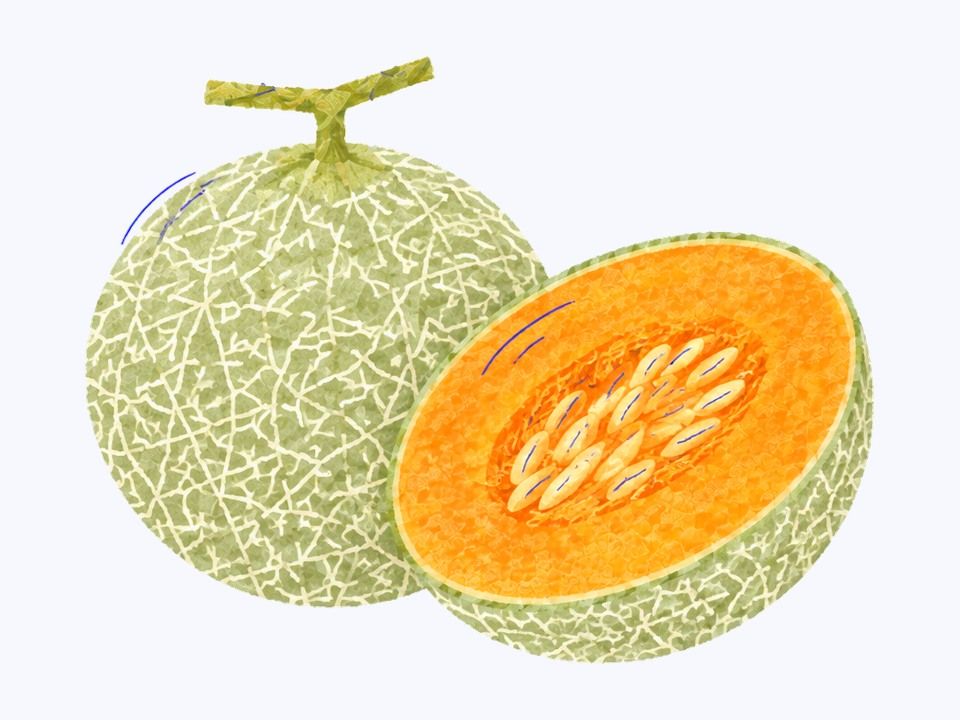
You stand at the melon stall.
One sign says Yubari,
the other says Furano.
Both are orange inside.
Are they the same?
How Furano and Yubari melons differThey look alike,but differ at the first bite
| Yubari | Furano | |
|---|---|---|
| What it is | One variety: Yubari King (夕張キング) | One brand: the variety changes with the season |
| Texture | Very soft: little fibre, very juicy | Firm, with flesh to bite into: softer the longer it sits |
| Aroma and sweetness | Rich aroma, a very consistent taste | Very sweet: about 15° Brix, according to the city |
| How long it keeps | Ripens fast: it can't wait | Keeps better: ripens 5–10 days at room temperature after picking |
| What to check | Sticker and grade: Tokushu, Shu, Yu, Ryo (特秀, 秀, 優, 良) | The variety and picking date on the box |
| Best for you if | You'll eat it today or tomorrow | You're still travelling, or sending it to someone |
Yubari based on JA Yubari City, Furano based on the City of Furano's official comparison. Sweetness varies with variety, grade and ripeness.
Furano or Yubari melon: which is sweeter, and the pricesFurano's sugar content is higher,and the texture differs too
The City of Furano's comparison puts Furano at about 15° Brix and Yubari at about 11–12° (a comparison made by the growing area itself). Yubari's appeal is its aroma and the way it melts in the mouth. Melons from the same area also vary with variety, grade and ripeness, so for sweetness and bite, choose Furano; for aroma and softness, choose Yubari.
All of these are Furano melons. 2026 prices including tax from the farmers' co-op online shop (sales have ended), shipping extra: two Shu grade for ¥6,580, one Tokushu grade for ¥4,980. Prices for single melons in shops are as marked on the day.
NotebookThere's no need to ask which is better. Decide which day you'll eat it, and the answer follows.
Why Furano melons are sweetThe sweetness iswhat the night didn't use up
Summer nights cool enough for a jacket are good for melonsBy day the melon soaks up the sun and stores sugars in the fruit; at night it breathes and uses some up. Furano is a basin with a big gap between day and night temperatures, so less is used at night. Melon fields also sit mostly in well-drained spots along the Sorachi River and around the edges of the basin.
Yubari guards one taste; Furano relies on many farms taking turnsYubari uses a single variety, and in 2015 it was registered as a national Geographical Indication, so no other place may use the name. Furano's areas used to grow melons each in their own way. From September 2018, starting with some varieties, they began selling together as "Furano Melon" (富良野メロン), using different varieties to cover early summer through to autumn. So one has a consistent taste, and the other a long season.
Furano melon season and varietiesFurano isn't one melon:varieties take turns month by month
Early to mid-July has the most choice. No need to memorise variety names. R113U copes with heat and stays sweet in hot weather; R113 only becomes sweet in autumn. The co-op also lists an early variety, Lennon (レノン), and overall shipping runs from mid-May to mid-October.
How to choose a melon and when to eat itDecide the day you'll eat it,then ask the shop to pick one for you
In Furano, two questions are enough: "Hinshu wa? Itsu shukaku?" (品種は? いつ収穫?: which variety, and when was it picked?) If you want it tonight, also ask "Konban taberaremasu ka?" (今晩食べられますか?: can I eat it tonight?) Counting from the picking day, how long to wait depends on the texture you like:
Take it out of the box and keep it at room temperature; chill it only 2–3 hours before eating. Yubari ripens fast, so this table doesn't apply: once the skin turns yellow-green and it smells fragrant, eat it soon.
Where to buy Furano melonsTo eat now, buy slices;to take away, ask about ripeness
On a stay of just a few days, start with slices: Farm Tomita's Furano Cut Melon (富良野カットメロン), from ¥520, early June to late September, sold at Sachi no Komichi (倖の小路) and Hana no Ie (花の舎). Prices change through the season.
Can you take melons home to Taiwan?You can't take them to Taiwan,so finish them here
Fresh melons can't be brought into Taiwan, and cut ones are no different. If you can't finish it, send it to a friend in Japan: Furano melons, which keep better, are the safer choice.
More to read: the basin and how the two areas became famous
① Why Furano suits melons
The sweetness is what the night didn't use up.
NotebookSummer nights here are cool enough for a jacket, and that's good news for melons.
② How the two areas became famous, and how big they are
Yubari became famous first; Furano slowly joined its areas into one brand.
- Around 1923Yubari began trial growing, but the melons weren't sweet enough and it stopped
- 1960–6117 keen Yubari growers formed a cooperative, and the new variety was named Yubari King
- 1970sIn Furano's Yamabe and Kamigoku areas, some rice paddies were turned over to melons
- 2015Yubari melon registered as a GI: the state protects the rule that "only this area may use this name"
- 2018Growers across Furano began using the name "Furano Melon" together, starting with some varieties
JA Furano's melon fields cover more than 200 hectares, making it one of Hokkaido's three big melon areas, alongside Yubari and Kyowa's Raiden (らいでん).
NotebookYubari sells one taste that must never change; Furano relies on many farms shipping in turn. Neither is easy.
More to read: other Japanese growing areas, and imports
③ Melon seasons across Japan's growing areas
The deeper into summer, the further north the melons come from.
Nov–AprFew domestic melons, and expensive
Main areasWarm places such as Shizuoka, Kumamoto and Kochi
In FuranoNo fresh local melons
May–JunThe most in the country
Main areasIbaraki, Kumamoto
In FuranoShipping starts in mid-May
Jul–AugHokkaido's turn
Main areasHokkaido, Yamagata, Aomori
In FuranoEasiest to find
Sep–OctWinding down
Main areasHokkaido, then south-western Japan
In FuranoShipping until mid-October, fewer the later it gets
In 2022, Ibaraki shipped the most, Kumamoto came second and Hokkaido third. The months reflect what came into the Tokyo and Osaka wholesale markets in 2023.
NotebookIf you're coming for the melons, plan for late July to mid-August. There are some in May and October too, but don't fly in just for them.
④ Japanese and imported melons: the differences
The melon on your cake may well be imported.
NotebookCut melon in shops in winter: don't assume it's from Furano. Check the line that gives the origin.
Furano to-do listIf you'd like to go,here's what to do next
- Ten minutes
- Just want a taste: buy slices at Farm Tomita (early June–late September), from ¥520
- Half a day
- Want to pick your own: bookings were paused in summer 2026, so ask the tourism association about next year first
- Eating tonight
- When buying a whole melon, ask "Konban taberaremasu ka?"
FAQ
Is a Furano melon a Yubari melon?
No. A Yubari melon can only be Yubari King, grown in Yubari City and shipped under its rules.
Are there still green-fleshed melons?
There used to be many; now orange flesh is the norm. If you want green, ask at a farm shop.
Which months can I buy them?
The co-op ships from mid-May to mid-October. In Furano shops it's mainly June to September, and easiest in July and August.
Can I take one home to Taiwan?
No. Fresh fruit isn't allowed. If you've packed some by mistake, throw it away or declare it on arrival.
Melons are heavy.
They can't go home to Taiwan.
So finish them here.
Read next
 Furano is full of lavender, so why does it grow so many onions?After melon season→
 Snow covers the fields: where can you still buy farmers' vegetables?Where to buy→
 Step into Furano's fields and be a farmer for half a dayTake a walk into the fields→
Sources: 8
- JA Furano: melons (Japanese)
- JA Yubari City: Yubari melon GI registration (Japanese)
- JA Yubari City: grades and how to eat (Japanese)
- Agriculture and Livestock Industries Corporation: melon supply and demand (Jul 2024) (Japanese)
- JA Furano: Ogaru (Japanese)
- Nakafurano Tourism Association: Terasaka Farm (Japanese)
- Ureshipa (ウレシパ): melon picking (Japanese)
- Traveller quarantine reference table
Main sources for this article: City of Furano (official): comparison with Yubari / JA Yubari City