
 Food
2026.11 Furano, Hokkaido Notes at the table
Furano is full of lavender, so why does it grow so many onions?
How rice paddies became onion fields, which months, where to buy
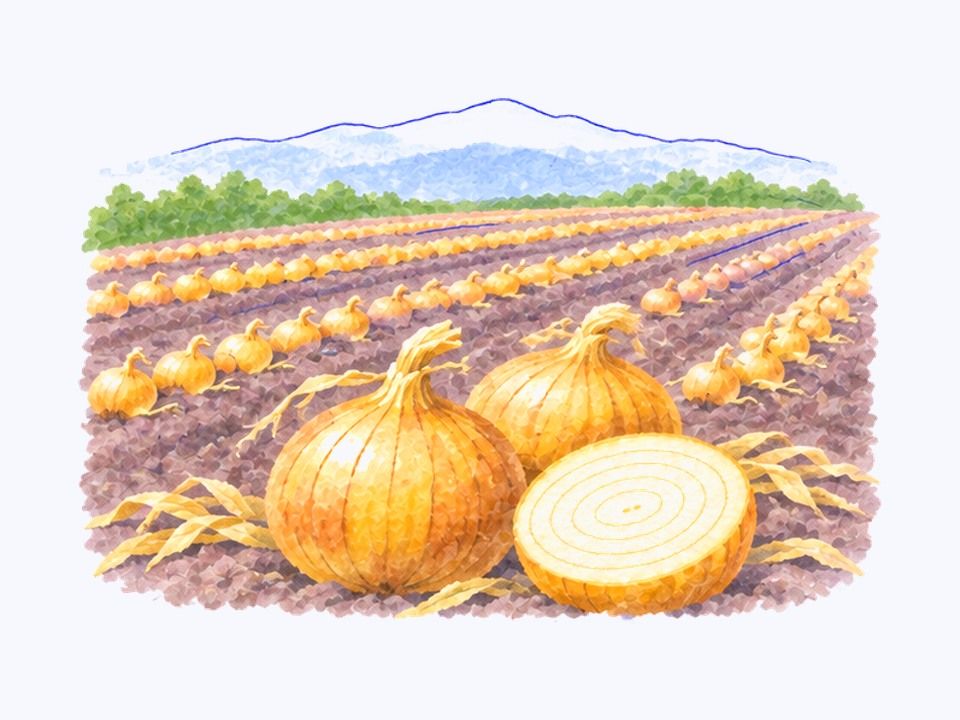
You came for lavender,
but onions line the road.
Fifty-odd years ago,
much of it was rice paddy.
Flowers a month, onions a year.
Why Furano suits onions: temperature swings, land, storage
Climate, land and long storage, plus over a century.
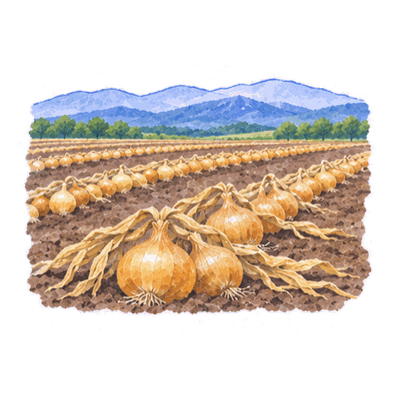
With all that lavender, why do farmers live on onions?
The turning point came around 1970.
Onions were grown here by 1907 and spread across the city around 1965; when rice cuts began in 1970, more paddies switched over.
- At first
- Furano grew up on rice paddies
- Around 1970
- The state began cutting rice output, and paddies switched to onions in earnest
- 2001
- Onion prices crashed, and growing areas had to destroy crops on the spot; the co-op began looking for processing and restaurant buyers
- 2006
- Low-oxygen cold stores were built, so onions can ship from September to the next June
- 2016 report
- Onions make up about a quarter of the ¥30.4 billion in sales at JA Furano (JAふらの)
Sources: Agriculture and Livestock Industries Corporation 2016 / same, 2009. For how the lavender survived, see this article →
How long a farmer works for one onion
Hardly a month to rest.
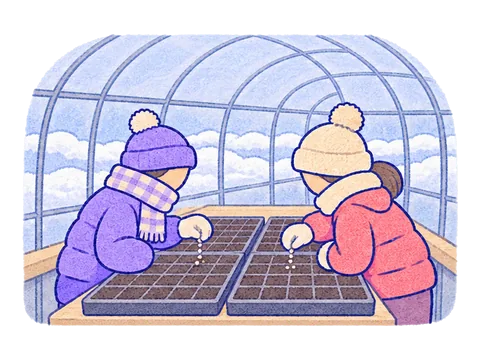
A Furano onion farmer said in an interview that there's hardly a time in the year you could call the off-season: sowing in the greenhouse in mid-February, moving seedlings to the fields in late April, harvesting early varieties from late July, and only finishing most of it in early October. Then come meetings and preparing next year's fields.
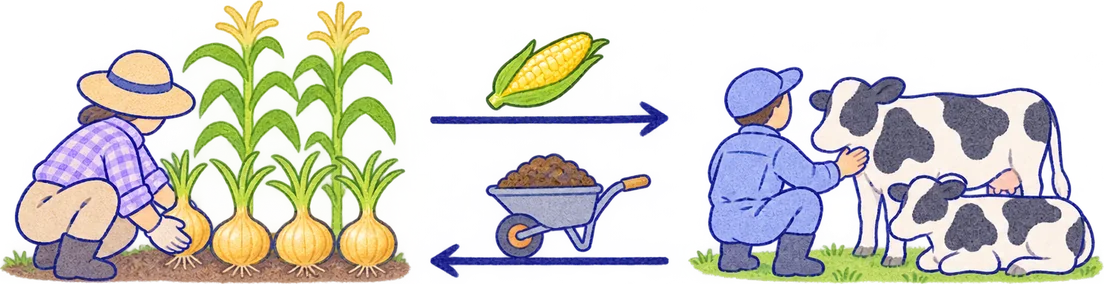
Fields tire too after so many years. Some had grown onions for nearly forty years running, and around 2009 farms growing only onions began to see lower yields. Fields are larger now, and some farmers rotate onions with wheat, beans and carrots. Some farms with land to spare first switched to maize to sell to dairy farmers as feed. In 2007–09 the co-op also ran a trial subsidy: onion farmers grew maize for cattle, and dairy farmers sent cattle manure back to the fields. Cows and onions, seemingly unrelated, were linked this way.
The onion you buy began in February, with the snow still deep.
Summarised from an interview with an onion farmer (2022) / Agriculture and Livestock Industries Corporation 2009
Furano's onion output: third in Hokkaido
The flowers are famous, but the onion crop is big too.
- 1880Sapporo began growing Sapporo Ki (札幌黄) in earnest
- 1907The first seeds were sown in Shimo-goku (下五区), Furano, and the variety was Sapporo Ki
- Around 1965Growing spread across the whole city
- 1977A monument went up: "Birthplace of Furano Onions"
- 20111,460 hectares planted
Only cities and towns within Hokkaido are compared. Ministry of Agriculture, Forestry and Fisheries, 2024 crop statistics
NotebookFurano and Nakafurano are neighbours. Together they make about 125,000 tonnes, more than second place.
Eating Furano onions: which month, how to buy
Go by the month you're coming.
- Mid-Aug–Sep
- New crop: early varieties are softer
- Autumn to spring
- Keeping varieties: sharp raw, sweet when cooked. Mostly at the co-op shop Sep–Mar
- May–Jul
- May not be from Furano: check the origin
- Where to buy
- Farm shops and winter hours →
- With a kitchen
- Buy vegetables and cook dinner →
Where to buy Furano onions
Look at the fields; buy the onions.
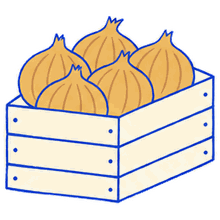
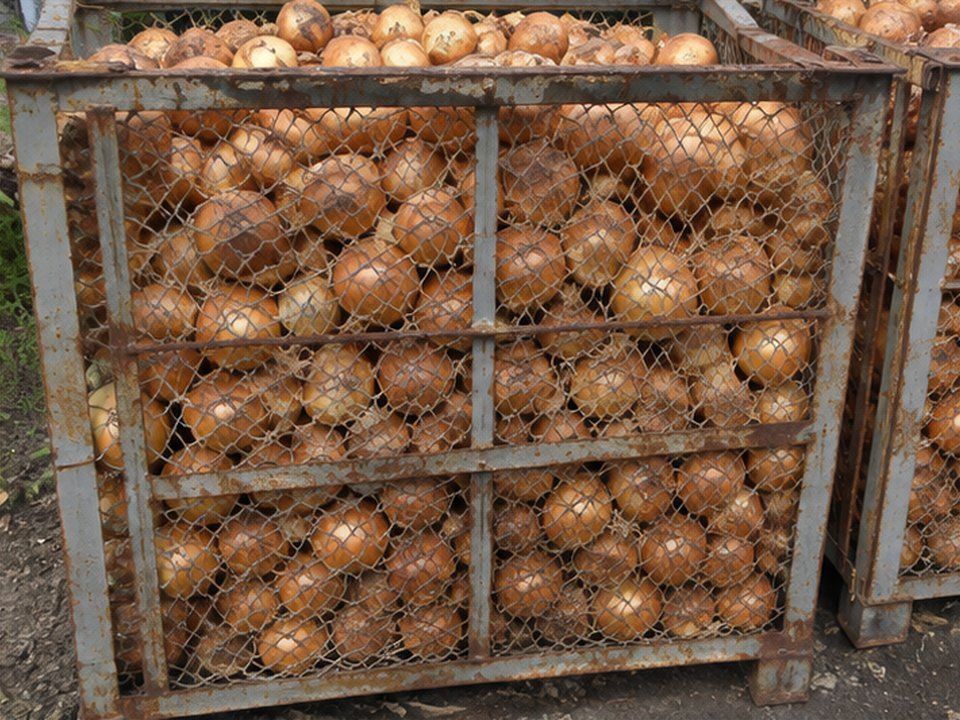
NotebookThere are no onion fields for sightseeing. To really see them, go to the farm shop and stand in front of a full crate.
How to eat Furano onions, and can you take them to Taiwan?
It isn't a souvenir; it's food to eat while you're there.
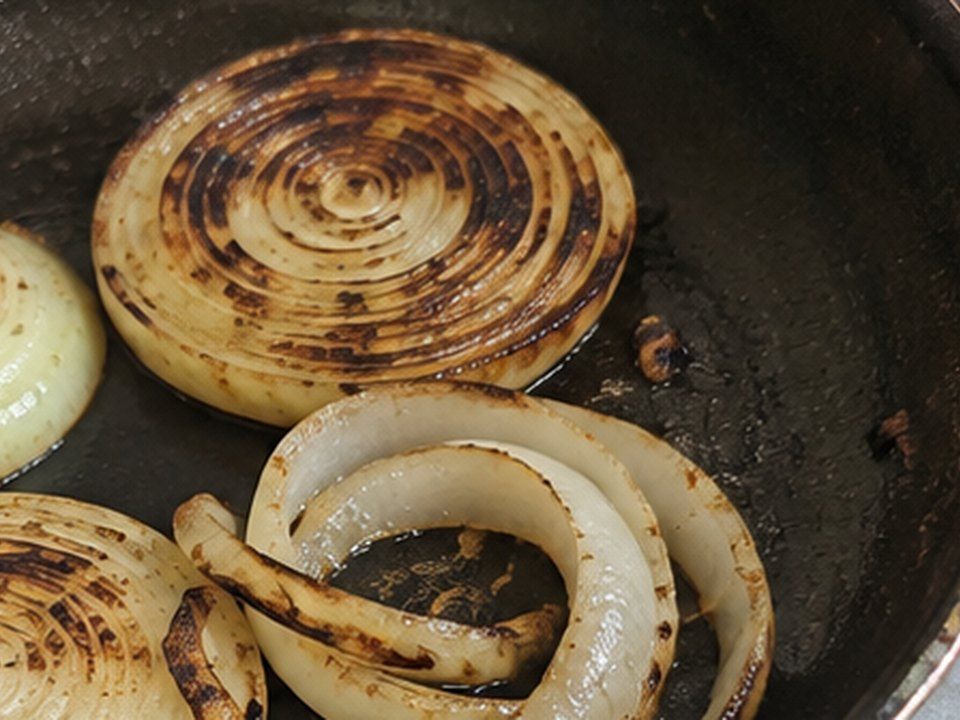
NotebookDon't go out of your way to buy them as souvenirs. Fry one yourself there, and you'll see why it's the big crop here.
Varieties and months
Hokkaido onion varieties
No need to memorise names; just know which kind comes in which month.
Kita Hayate No. 2 (北はやて2号)Harvested first
WhenShipped from mid-August
CharacterSoft and mild, good raw
Okhotsk 222 (オホーツク222)Autumn to winter
WhenSep–Feb
CharacterEven shape, good raw or fried
Kita Momiji 2000 (北もみじ2000)The main one
WhenOct–May
CharacterLarge, firm and keeps very well; about half of Hokkaido's crop (figures from around 2015)
Super Kita Momiji (スーパー北もみじ)Harvested last
WhenShipped from winter to spring
CharacterKeeps well, good for slow frying
Sapporo KiAn old variety
OriginThe first variety grown in Furano, in 1907
CharacterThick, soft and very sweet when cooked; hard to grow and rare now
These are Hokkaido's main varieties; not every one can be bought in Furano. JA Furano says it mainly grows keeping varieties high in pungent compounds.
NotebookWhen you see "Hokkaido onions", think of the month first. In autumn, eat the new crop; in winter, the keeping varieties.
Onion seasons across Japan's growing areas
Seasons of Japan's onion-growing areas
One onion, north and south taking turns.
Months reflect arrivals at Tokyo's central wholesale markets in 2023. Hokkaido grows about 60% of Japan's onions (65% in 2015).
NotebookIf you come to Furano in early summer, the onions in shops may not be local. For the local new crop, look from mid-August.
FAQ
Are Furano onions sweeter?
Raw, they're actually sharper. JA Furano explains that the pungent and bitter compounds turn sweet and savoury when cooked.
Can I buy them in winter?
Yes. They're harvested in autumn and sold in winter. Ogaru closes on Tuesdays Nov–Mar and over New Year, and sometimes for unscheduled or maintenance closures, so check notices before you go.
Can I take onions back to Taiwan?
No. Without going through quarantine procedures, fresh onions can't be taken to Taiwan. Buy processed products without meat instead.
Flowers bloom for a month.
Onions take a whole year.
Next time, glance at them too.
Read next
 Furano's table: asparagus in spring, onions in winterBeyond onions, what to eat each month→
 Snow covers the fields: where can you still buy farmers' vegetables?Where to buy this onion→
 The colours of Biei's hills are grown by farmersWhy a field changes crops→
Sources: 12
- Ministry of Agriculture, Forestry and Fisheries: 2024 crop by municipality
- Agriculture and Livestock Industries Corporation (2016)
- Same (2009)
- Onion farmer interview (2022)
- Hokkaido Development Bureau: onions (Japanese)
- JA Furano: about the area (Japanese)
- JA Furano: local specialities (Japanese)
- Furabism (ふらびズム): Furano onions (2012) (Japanese)
- Tokyu Store: JA Furano onions (2023) (Japanese)
- Agriculture and Livestock Industries Corporation: onion supply and demand (2025) (Japanese)
- JA Furano: Ogaru (Japanese)
- Traveller quarantine reference table