2026.11 Furano and Biei, Hokkaido Notes before an early start
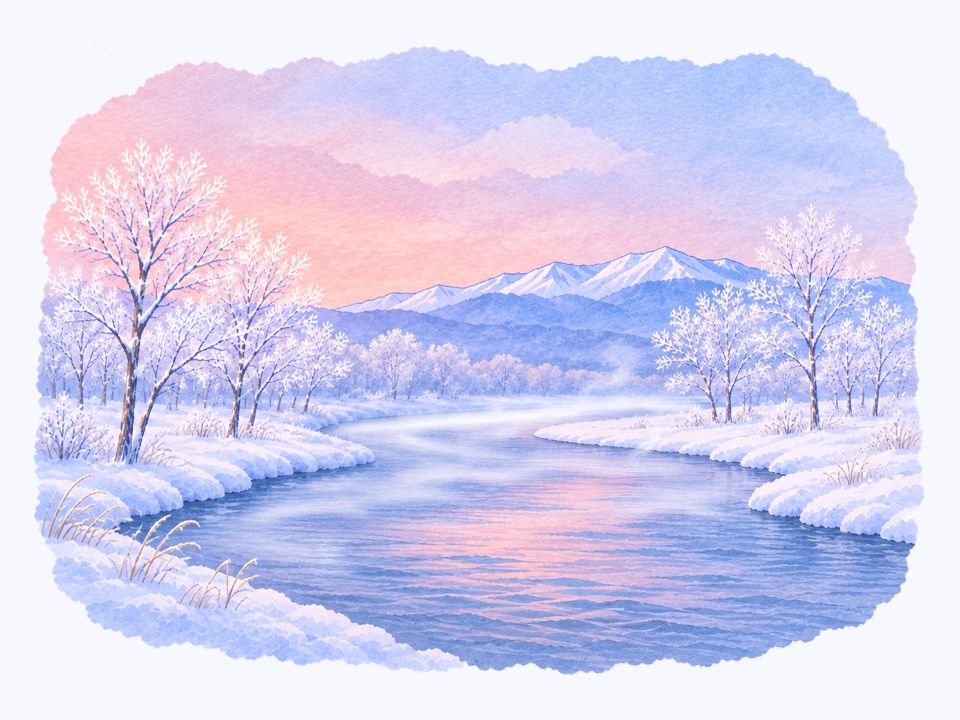
On mornings when Furano's rivers steam,branches sometimes grow rime Winter rime: which months, what time, where, and how to go without a car
From far away,
it looks like snow on the trees.
Up close,
it is fine threads of ice.
It rarely waits for late risers.
Pick a Jan or Feb morning,and go around sunrise.Your chances are better when it is cold, clear and still, but no one can promise it. Without a car, stay in central Furano or near the ski area and book a 7:00 riverside tour with pick-up. Don't walk down the riverbank on your own.
What rime is: how it differs from snow and diamond dust
First, work out which kind of white you are looking at.
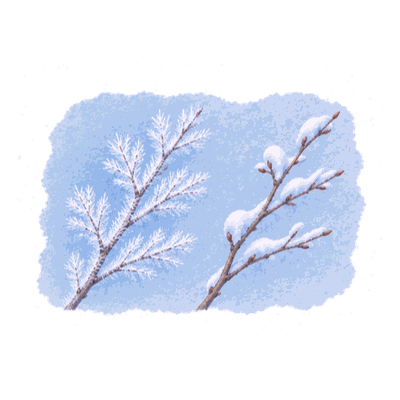
Rime (霧氷, muhyo)In the Japan Meteorological Agency's classification, rime is the general name for ice that forms from water vapour or fog droplets on branches and other things. It includes hoar frost, soft rime, and hard rime, which is clearer and forms solid lumps.
Hoar frostMostly water vapour turning straight into ice crystals. You can often see the shapes of single needles or flakes.
Soft rimeSupercooled fog or cloud droplets (below 0°C but not yet frozen) freeze the moment they touch something. White, opaque and very brittle.
Diamond dustIt doesn't grow on trees. Tiny ice crystals fall from a clear sky and seem to float in the air, glittering when the sun catches them.
Just snowIf it snowed the night before, the trees turn white too. Clumps weighing down the branches are most likely just snow.
NotebookWhen you see a row of white trees, don't hurry over. Stand by the road and zoom in on the edges of the branches: if fine ice is growing there, that's your reason for getting up early today.
When to see rime in Furano, and how cold it must be
Cold is only the first condition.
Choose January or February firstWe worked through five winters, 2021–22 to 2025–26, using the Japan Meteorological Agency's daily data for Furano. Days with a low of −15°C or below averaged 15 in January, 9 in February and 5.6 in December, with only 1.2 in March. These are cold days, not days with rime.
How coldWe found no official temperature threshold for rime. A traveller who lives in Hokkaido wrote that the chances at Torinuma are higher on still mornings of −10°C or below. That is one person's view, not a rule.
Diamond dust is something elseThe Japan Meteorological Agency says it tends to appear below −10°C on very clear, calm, windless days. The Biei Tourism Association says −10 to −15°C or below, with moisture in the air too. Don't use these as the threshold for rime.
Besides cold, you need moistureRivers and ponds that don't freeze give off white steam (kearashi, けあらし). When that moisture meets cold branches, it can turn into ice.
NotebookThe night before, check three things: whether it will be clear, the low, and the wind. Even with all three right there may be none, so don't plan it for the morning of a one-night stay.
What time to see rime in Furano: winter sunrise times
Around daybreak is the best bet. The later it gets, the less certain.
DecemberSunrise about 6:42 early in the month, about 7:03 at the end
JanuarySunrise about 7:03 early in the month, about 6:48 at the end
FebruarySunrise about 6:47 early in the month, about 6:10 at the end
MarchSunrise about 6:08 early in the month, about 5:16 at the end. The morning snowshoe tour runs only until early March, and by the 7:00 meeting time it has been light for 50 minutes or more
NotebookSunrise times were worked out from the National Astronomical Observatory of Japan's table for Nemuro: the latitude is about the same, so we added about 13 minutes, without allowing for mountains. On a tour, go by the meeting time. On your own, stay away from the water before it is light.
Where to see rime in Furano and Biei, and getting there without a car
Look at the trees by the water. Stay on the road yourself.
To Torinuma, the bus can't beat sunriseOn the Rokugo Line (麓郷線), the first bus leaves the station at 8:20 and reaches 9-sen (9線) at 8:41; from there walk about 10 minutes. The return bus is at 9:42. The Asamachi Line (麻町線) reaches the park entrance at 11:42 and returns at 11:56, and the next one is not until 16:56. Ask the tourism association first how easy that stretch is to walk in winter.
At dawn, a taxi is the only wayGoing by the taxi company's fares, a one-way trip in winter starts at about ¥2,800, with waiting time extra. Book both ways the day before (0167-22-2800). If you can't book the return, don't go: you can't count on hailing a taxi out there.
Ask before you go to TorinumaA record from December 2024 says the car park is closed in winter. Before you set out, ask the tourism association (0167-23-3388) whether the park is open this year, and about the paths and toilets. Keep away from the edges of the pond and streams: under the snow you can't see where the bank is, and some places are thin ice.
Furano's riversidesWhat makes them special is that one morning may bring three things: rime, river mist, and frost flowers on the ice. We found no official winter viewpoint. Go with a tour, and don't go down the riverbank on your own.
Biei River (美瑛川, Biei)What makes it special is that a whole line of riverside trees may turn white together: someone saw this on the morning of 12 Feb 2026. But we found no spot you can reach at dawn without a car and stand at safely. If you stay in Biei, ask the tourism association first (0166-92-4378). Don't stand in the road or on a bridge without a footpath.
Without a car, let someone who picks you up take you.
Early-morning riverside snowshoeingUkkizu (ウッキーズ): "Asa no Kawa no Fushigi" (朝の川のフシギ) (association listing): put snowshoes over your boots and walk about 40 minutes along the river with a guide, looking for rime, river mist, frost flowers and ice bridges. Sometimes you walk on the frozen river, stepping only where the guide leads. Mid-December to early March, 7:00–8:15 (confirm the meeting time when you book). Gear and insurance are included; ages 3 and up. For both tours, budget ¥4,000–27,000 per person: the Japanese and English official sites list two different sets of prices, and the English ones are higher.
Winter raftingUkkizu: "Fuyu no Genso Kawakudari" (冬の幻想川下り) (association listing): drift downstream in a rubber raft for about an hour. With luck you pass through river mist and see rime from the water. 9:00–11:30. Up to four people; ages 12 and up. Confirm the season when you book.
For bothEach tour takes only one group at a time, and you must book. The Japanese site says cash only; the English site takes cards, but its booking deadline is earlier (3 days ahead for snowshoeing, 5 days for rafting). Changing the date is free. Free pick-up covers only central Furano and the ski area; if you stay in Biei or elsewhere, arrange it first. The official sites don't agree on meeting times, cancellation rules and seasons: when you book, ask about all of these and the total price at once.
NotebookIf you choose just one, I'd pick the 7:00 riverside snowshoe tour: it is closer to sunrise and cheaper. Rafting meets at 9:00, a second choice if you'd rather not get up so early.
Below-zero mornings: looking after hands, feet and cameras
Standing and waiting chills you faster than walking.
FrostbiteRedness and pain are warning signs. Take even more care if skin turns white or greyish-yellow, goes hard or loses feeling. Don't rub it or warm it by a fire. Get indoors as soon as you can, rewarm with warm (not hot) water or body heat, and see a doctor. If your feet are frostbitten, walk as little as possible. Constant shivering, confusion or slurred speech may mean hypothermia: call 119.
By the riverUnder the snow you can't tell where the bank is or where the ice is thin. Without a guide, don't leave the cleared road or step onto the ice. If there is a blizzard warning, don't go out.
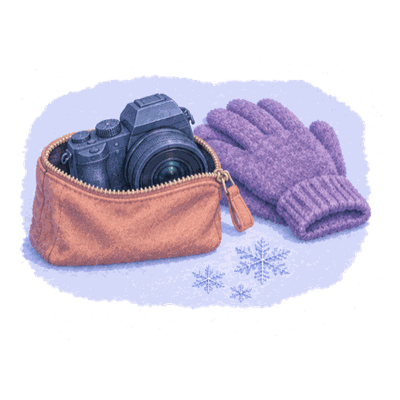
Phones and camerasKeep spare batteries warm in a pocket, away from keys. Before going back indoors, put your phone and camera in your bag and let them warm up slowly, or condensation may form inside.
NotebookFor what to wear, see "Furano at minus twenty" at the end. One more note here: if you want to take photos, bring gloves that are easy to take off and put back on.
No rime? What to do with that morning
Not seeing it is perfectly normal.
You may come away empty-handedSomeone stayed in Biei from 11 to 19 Feb 2026 and recorded rime only once, on the morning of 12 Feb. On the 16th, the white trees by the river turned out to be snow. Then it grew warmer and the weather turned bad, and looking back on the 18th, they wrote that they had missed it.
Keep a spare morningStay two nights or more and book a tour you can rebook for free. If the forecast the night before makes you want another day, ask first whether there is space.
Look at other kinds of whiteOn a tour you may still see river mist or frost flowers on the ice. On your own, stand on a cleared footpath and enjoy the snowy trees and the white fields in the distance. Don't go down to the river or into the fields.
NotebookEven without rime, the trip isn't wasted. A cold, quiet town that hasn't woken up yet is winter here too.
FAQ
Is there rime in Furano every morning?
No. It needs enough cold and moisture, and cloud and wind affect it too. We found no official count of the days it appears.
Is the Hoshino Resorts Tomamu rime terrace in Furano too?
No, it isn't in Furano City. It is on a mountain in Shimukappu Village to the south, reached by gondola. It is a different outing from riverside rime, so plan the transport and timing separately.
Can I see it in the afternoon if I don't get up early?
Don't count on it. It has been recorded still there at noon, but once it warms up or the wind rises, it may fall off. Early morning is a safer bet.
Can I go to Torinuma in ordinary snow boots, without snowshoes?
Not always. A record from December 2024 says the path was packed down and snowshoes weren't needed; one from January 2022 describes walking in deep snow in other people's footprints. Ask before you go.
Notebook notes are suggestions drawn from research, not first-hand experience. The records we cite show how things were on that day, not every year. Sunrise times and winter fares are worked out from published tables. Amounts change, so check official sites.

 Nature
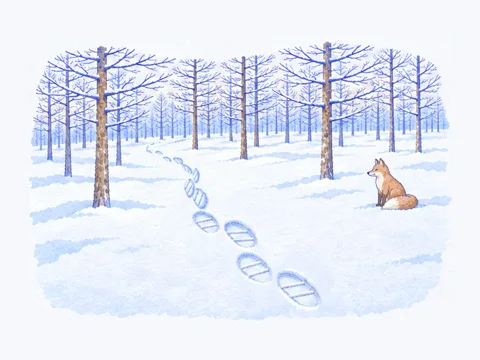 Winter in the Furano basin: worth an early start without skisOther ways to plan the same morning→
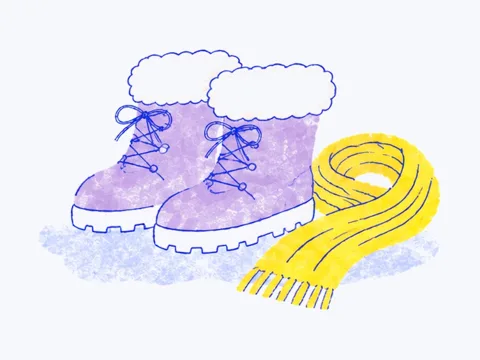 Furano at minus twenty: what to wear outsideDress before you head out→
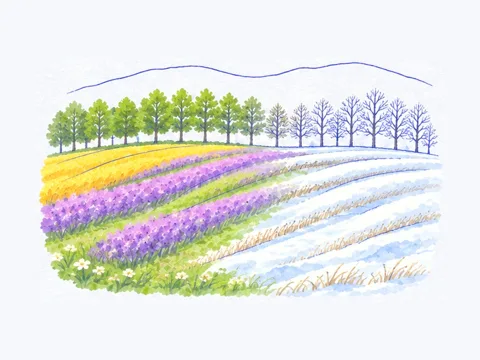 Summer flowers or winter snow: when should you visit Furano?Choose the month first→