
 Food
2026.11 Chitose, Hokkaido Notes before flying home
Chitose, beside the airport: why is it home to salmon?
Its rivers and industry, the Salmon Park and souvenirs
By the airport you land at
is where salmon call home.
Why here, of all places?
Is it the clean water?
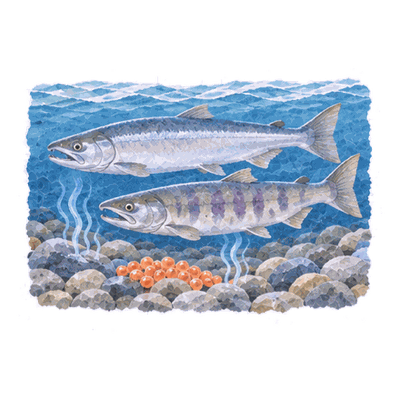
Chitose's natural settingClear water, gravel beds,and a way to the sea
The Chitose River flows down from Lake Shikotsu, one of the clearest lakes in Japan, and the spring water of a tributary is one of Japan's 100 best waters. Groundwater wells up between the gravel on the riverbed. In winter it is warmer than the river, which helps the eggs grow. And the river runs all the way to the sea, so the grown salmon can come back.
More: three conditions, Furano for comparison, a salmon's life
Mountains and rivers in both: why so few salmon in Furano?
- Water: from a lake and springs, very clear
- Riverbed: good for spawning
- Route: reaches the sea
- Salmon can come back
- Water: many rivers were muddy, some with sulphur
- Riverbed: not good for spawning
- Route: blocked downstream by the Sorachi Otaki (空知大滝) falls
- Very few salmon
The Furano side is an estimate in the History of Kamifurano Town (上富良野町史), based on an 1857 survey record and studies made before settlement.
A salmon's life, from birth to its return
- AutumnSpawning in Hokkaido peaks around October. One female lays 2,000–3,500 eggs and dies after spawning
- WinterThe eggs hatch in about 2 months, then the young grow for about 2 more months on the yolk in their bellies
- SpringAt about 4 cm and 0.4 g, they drift downstream to the sea
- At seaThe Sea of Okhotsk and the North Pacific, all the way to the Bering Sea
- ReturnMost often in their 4th year, they swim back to the river where they were born
Chitose's salmon industryPeople are here too,hatching and releasing for 100+ years
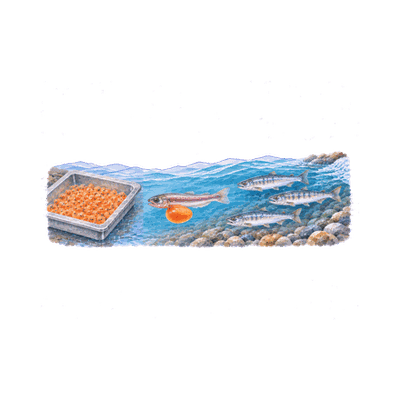
The Ainu people by the Chitose River had long relied on salmon to get through winter, but in 1878 the Meiji government banned salmon fishing in this river. In 1888 a government hatchery was set up here, and egg collecting and releasing go on to this day; Ainu people also still pass on their salmon-fishing culture. The river lets salmon come back, and people help them on, generation after generation: that is what makes it home.
More: over 100 years of history, and how many return each year
- EarlierThe Ainu (アイヌ) people called it "kamuy chep" (カムイ・チェプ), the fish of the gods. They used the flesh, the innards and the skin, and dried salmon was both winter food and a trade good
- Edo periodSalmon became big business for the Wajin (Japanese from Honshu), and Ainu people were drawn into forced labour. Between 1804 and 1818 the upper Chitose River was set aside as a salmon spawning ground, with guards
- 1888The government's Chitose Central Hatchery opened and sent fertilised eggs all over Hokkaido
- 1896A fish wheel learned from the United States was put in the river, later called the "Indian Suisha" (インディアン水車, Indian water wheel)
- TodayIn autumn the parent fish are caught for eggs; in spring the young are released back into the river
2022 was the highest since records began in 1888; 2019–21 were all around 300,000. 2022 and 2023 follow quotations in reports at the time, 2025 follows the Hokkaido Shimbun, and 2024 is worked out from the "58% drop" in the same article.
NotebookThe returning salmon did not fade away slowly: just after a record high, three years later only about one ninth were left. 2026 is lower still: about 4,800 by 26 Sep, less than half of the same time last year. People can hatch the eggs well and look after the river, but the years at sea are out of their hands. When you watch the wheel, the empty baskets are part of the view too.
Kinds of salmonThe ones swimming up the Chitoseare mostly chum salmon
Akizake, tokishirazu, ginke and buna sound like four fish, but they are all chum salmon; the names describe the season and the fish's condition. Tokishirazu are caught at sea in spring and summer; ginke is not coho salmon either.
Below are 8 main salmon and trout eaten in Japan; not all of them return to the Chitose River. In 2025, salmon was the fresh seafood Japanese households bought most (all kinds together, about 2 kg per household; households of two or more, not counting salted salmon or eating out).
Often grilled or in bento
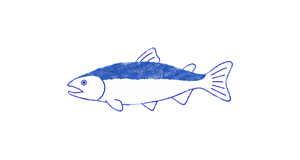
Chum salmonAkizakeNo black spots, slender tail stalkMild: grilled, hotpot, rice cooked with it
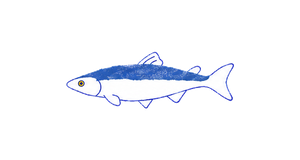
Sockeye salmonBenizake (ベニザケ)The slimmest, no black spots, deep red fleshRich: salt-grilled
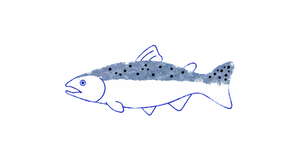
Coho salmonGinzake (ギンザケ)Black spots mostly on the back and upper tailOily: baked in foil, fried
Often as sushi or sashimi
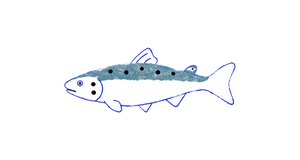
Atlantic salmonSāmon (サーモン)A few large black spots on the gill coverMostly farmed, oily: sushi, sashimi
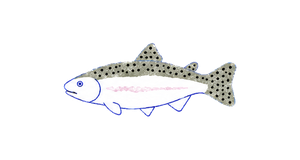
Rainbow troutNijimasu (ニジマス)Many small black spots, often a pink band on the sideFarmed at sea abroad, it's called trout salmon (トラウトサーモン): common in sushi
Each known for its own dish
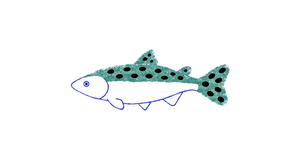
Pink salmonKarafutomasu (カラフトマス)Large oval black spots on the tailOften canned
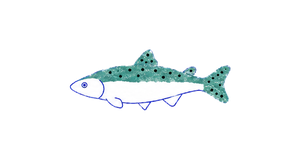
Cherry salmonSakuramasu (サクラマス)Black spots scattered on the back, none on top of the headThe traditional fish for Toyama's trout sushi
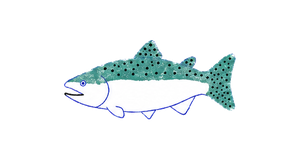
Chinook salmonKing salmon (キングサーモン)The largest, small black spots on the back and the whole tailOily: steaks, salt-grilled
Hand-drawn illustrations, not photos: drawn from field-guide features as they look at sea. Colour and shape change at spawning. Sizes are not to scale.
More: the names akizake and tokishirazu, and Lake Shikotsu's kokanee
Lake Shikotsu's kokanee (ヒメマス, himemasu) is also sockeye salmon, but one that never goes to sea; it was brought from Lake Akan in 1894–96. In summer you may see cherry salmon through the aquarium's viewing windows. "Trout salmon" is used only for rainbow trout raised at sea abroad.
Akizake and tokishirazu are the same chum salmon
Names follow a Hokkaido fish guide and fisheries research station studies.
NotebookMany names on menus describe the season and the fish's condition, not the species. Akizake, tokishirazu, ginke and buna are all the same chum salmon. Ginke is not coho salmon either.
Japanese salmonSalmon caught in Japan's seasnearly all come from Hokkaido
99%About this much of Japan's 2024 sea catch of salmon and trout came from Hokkaido (by weight; not farmed or river)
Most are chum salmon. Even when labelled "wild", it may have been released from a hatchery when young: exactly what Chitose has been doing all along.
More: farmed brands, and Japan's numbers
Nearly all caught at sea come from Hokkaido, and the catch is falling fast.
Caught at sea
How much49,900 tonnes of salmon and trout were caught at sea in 2024; Hokkaido about 99%
What fishMostly chum salmon; in Hokkaido mainly September–December
Good to know"Wild" fish may have been released from a hatchery when young
Farmed
WhereOver 100 local brands across Japan, from Sanriku to Kyushu, even inland
Best knownMiyagi's farmed coho salmon, the largest in Japan
Close to FuranoTaisetsu Salmon (大雪サーモン) from Kamikawa town: rainbow trout raised in the cold water of the Daisetsuzan mountains, for sashimi
Yearly figures from the Fisheries Research and Education Agency (updated 17 Apr 2026). The highest year was 1996, with 88.62 million. Sea catches and farmed brands follow JETRO's summary.
Notebook"Japanese and wild" sounds as if no one is involved, but behind akizake are more than 100 years of hatching and releasing. Buying a slice of akizake is buying into that cycle too. Don't treat it as something that will always be there.
Japanese and imported salmonAkizake and imported farmed salmondiffer in fat and how they're eaten
Akizake is mild, good grilled or simmered; farmed salmon from Norway and Chile is oilier. Much salmon sashimi is imported farmed fish. For Japanese akizake, look for "秋鮭" (akizake) and "北海道産" (Hokkaido): chum salmon caught or landed around Hokkaido, not necessarily from the Chitose River.
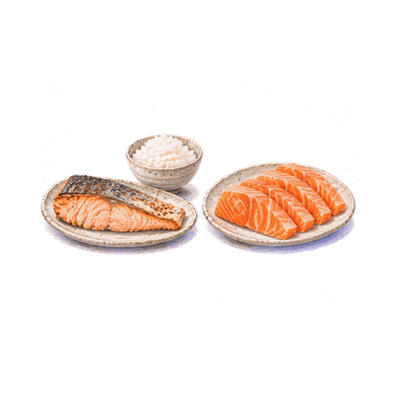
Don't make your own sashimi from akizake; salting does not kill parasites. To eat it raw, choose only fish labelled "生食用" (for eating raw).
More: four origins, and how to read labels
Japan: akizake
FishChum salmon, wild or hatchery-released
FatLow, mild taste
Good forPan-frying, hotpot, rice cooked with it
RawNo, unless it has been properly frozen and is labelled "生食用"
Norway
FishAtlantic salmon, farmed
FatHigh
Good forSushi, sashimi; often flown in chilled
RawCheck for the "生食用" label
Chile
FishCoho salmon and rainbow trout, farmed, mostly frozen
FatHigh
Good forBento, rice balls, pan-frying; the trout is also used for sushi
RawCheck for the "生食用" label
Russia and the US
FishSockeye salmon, wild, imported frozen
FatVaries; firm flesh, rich taste
Good forSalt-grilling, salmon flakes
RawCheck for the "生食用" label
In 2023 Japan imported ¥258.2 billion of salmon and trout from Chile, Norway, Russia, the US and elsewhere (JETRO). Uses and flavours follow a comparison of akizake, sockeye and coho and are general tendencies.
In a Tokyo market survey from 1996–2001, parasites were common in wild salmon and trout and none were found in farmed fish. Whether you can eat it raw depends only on the "生食用" label, not on the name "鮭" or "サーモン".
Three things to check on the label before buying salmon
Now you know why this is home. Last of all, go and see them.
Chitose Salmon ParkBefore flying home, at the Salmon Park,see the river they come back to
Don't do it the other way round: see the fish first, then the wheel, and eat last. Once you've seen how they come back, the same bowl of rice is different.
- 1See the fishChitose Aquarium: look at the riverbed through glass inside the building; tickets needed. 9:00–17:00, Dec–Feb 10:00–16:00; closed 29 Dec–1 Jan and 12–31 Jan 2027.
- 2See the wheelOutdoors, on the river. From about late August to early or mid December, then taken down; if you go in December, call 0123-26-2846 first. Fish have been far fewer in recent years, so empty baskets are not unusual.
- 3EatLast orders at the roadside station: rice balls and seafood bowls 16:00; grilled salmon 14:00, so arrive early if you want it. The salmon on the menu is not necessarily from the Chitose River.
From New Chitose Airport, JR takes about 7 minutes to Chitose Station (the Special Rapid does not stop), then about 10 minutes' walk to the aquarium and about 15 minutes to the roadside station. If you go on the day you fly back to Taiwan, allow 3 hours from leaving the airport to getting back (including the visit); check-in time is extra.
More: month by month, four places to eat, and getting there
In Mandarin the whole area is often called "the Salmon Park". "Salmon Park Chitose" is the roadside station's name; the aquarium is right next to it, as a separate facility.
What you can see each month: the aquarium and the wheel
Sep–OctThe season of return
What to seeThe wheel catching fish; shoals of salmon may be outside the viewing windows
Aquarium9:00–17:00
Before you goNumbers vary a lot from year to year
NovemberLate autumn
What to seeSalmon may still be outside the viewing windows
Aquarium9:00–17:00
Before you goIt's a wild river; spawning is not guaranteed
DecemberThe wheel's last days
What to seeIt may still be there early in the month; in 2025 it had ended by 11 Dec, so call 0123-26-2846 before you go
Aquarium1–28 Dec 10:00–16:00
Before you goClosed 29 Dec–1 Jan
JanuaryCheck before you go
What to seeThe winter riverbed and the fish inside
Aquarium2–11 Jan 10:00–16:00
Before you goClosed throughout 12–31 Jan 2027
FebruaryA quiet river
What to seeThe winter riverbed and the fish inside
Aquarium10:00–16:00
Before you goThe wheel has been taken down, so don't come just for it
Mar–AprThe young set off
What to seeBaby salmon outside the viewing windows instead
What to doFrom 20 Mar 2026, visitors could release young fish; nothing announced yet for 2027
Before you goCheck opening hours again before setting off
The aquarium's winter dates follow its 2026–27 ticket page; for unscheduled closures, the aquarium's notices take priority.
Salmon dishes: the roadside station in the park
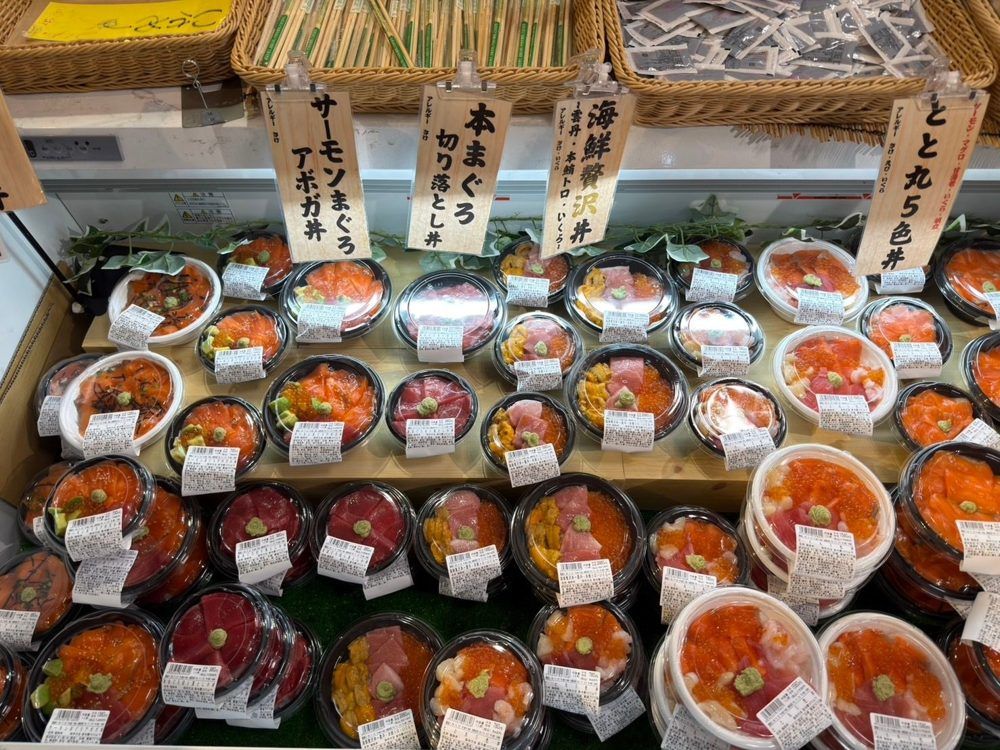
What we saw there
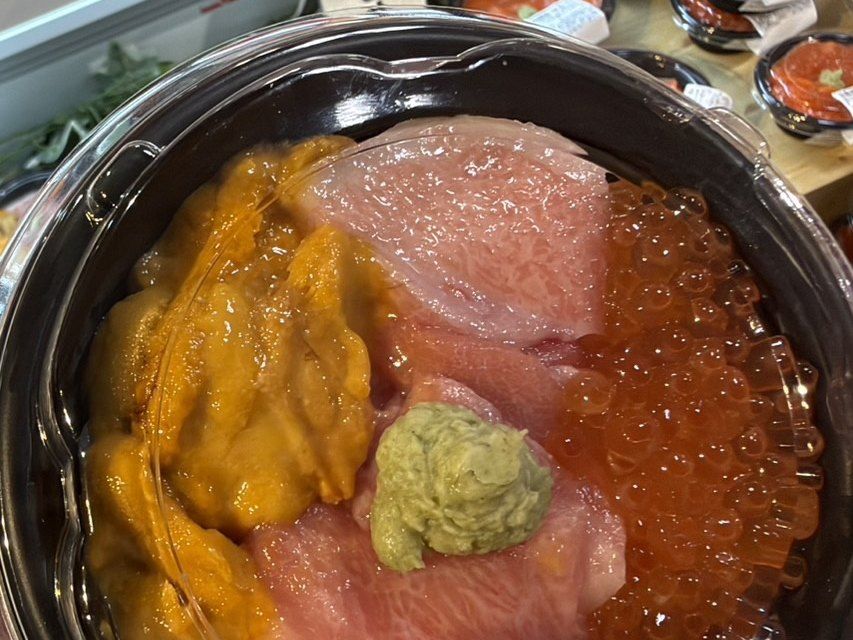
- Kaisen Zeitaku-don (sea urchin, bluefin tuna belly, fish roe): the label gives the ikura's ingredient as "鱒卵", trout roe (November 2026)
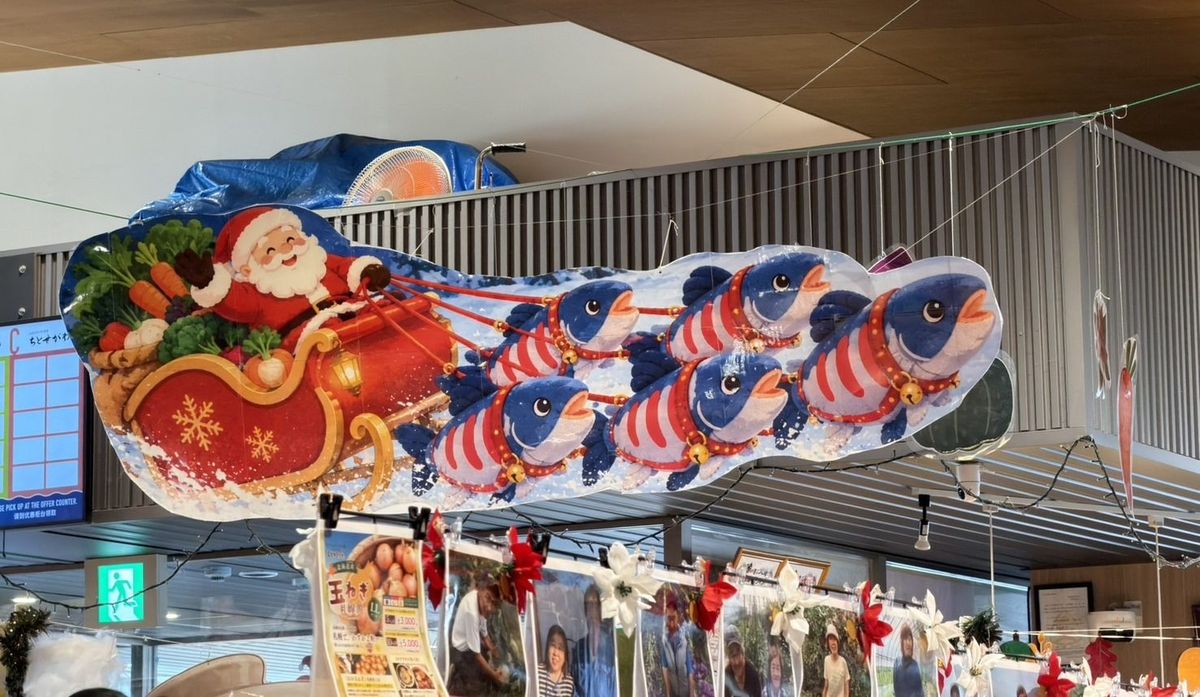
- Christmas already inside: the sleigh is pulled not by reindeer but by five salmon (November 2026)
Based on photos and product labels on site. Ingredients may change.
All four places above are in the roadside station, not the aquarium. Hours follow the official site and change with the season.
Getting to the Salmon Park from New Chitose Airport
Choosing salmon souvenirsTo take a little home,choose salted dried salmon
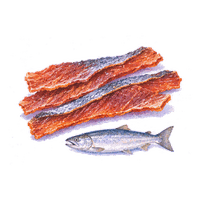
Sake toba, salted (鮭とば【塩】)This one is made only from Hokkaido salmon and salt, and needs no fridge until opened. Drying is a very old way of keeping food in Hokkaido. Stock varies on the day.
For people who cook, try sake-ippushi (鮭一節) instead: salmon shavings like bonito flakes, for making soup stock. When taking it back to Taiwan, processed seafood must also go through the red channel and be declared.
More: nine souvenirs, and taking them back to Taiwan
Salmon on the packet doesn't mean salmon inside.
We read every ingredient list in the roadside station's official online shop and sorted them into three groups by how much salmon is inside.
Souvenirs mainly made from salmon
Dried salmon stripsSake toba, salted (鮭とば【塩】)
Salmon cut into long strips and dried. The name is said by some to come from the Ainu word "tupa" (トゥパ).
IngredientsOnly Hokkaido salmon and salt
How to eatChew it as it is, or warm it a little. With drinks or tea
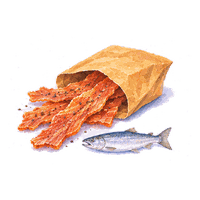
Salmon skin crispsSake no kawamo (鮭のかわも)
Salmon skin was once used to make shoes; now it's a snack.
IngredientsHokkaido salmon skin + seasoning
How to eatStraight from the bag; light and won't crush
Salmon jerkyHokkaido-san Sake Jerky (北海道産鮭ジャーキー)
Salmon jerky with a mildly spicy mentaiko flavour.
IngredientsHokkaido salmon + soy sauce, sugar and more
How to eatAs it is
Processed salmon products
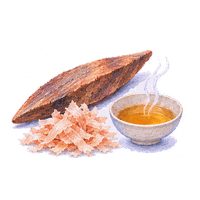
Salmon flakes like bonitoSake-ippushi (鮭一節)
Generally, salmon that have swum back up the river and used up their fat are actually well suited to dried fish blocks (fushi) like bonito.
IngredientsOnly sake no fushi (さけのふし), labelled "made in Hokkaido"
How to eatMake stock, or sprinkle on rice and tofu

Salmon roe soy sauceSorachisha Ikura Shoyu (空知舎 いくら醤油)
Overall winner of the 2024 Seasoning Championship. Room temperature until opened.
IngredientsThe first item on the list is fish sauce made from Hokkaido salmon; Hokkaido salmon roe too
How to eatEgg on rice, chilled tofu. Over 100 ml, so pack it in checked luggage
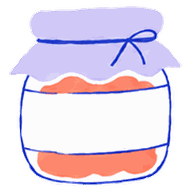
Grilled salmon flakesYakijake hogushi (焼鮭ほぐし)
The most versatile, but the origin only says "Japan", and it has colouring.
IngredientsJapanese salmon + oil, salt, colouring
How to eatMixed into rice, in rice balls
Snacks with only a salmon flavour
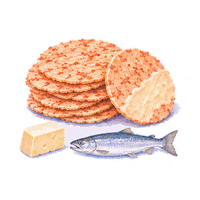
Salmon cheese crispsSalmon Cheese Pari (サーモンチーズぱり)
Individual pieces, easy to share with colleagues.
IngredientsStarch, cheese-chocolate coating; the salmon is only an extract powder
How to eatStraight from the bag
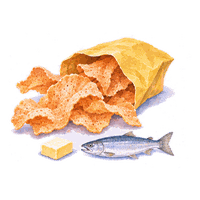
Salmon-flavoured chipsSake Shake SHAKE Chips (鮭しゃけSHAKEチップス)
What you're buying is the taste of salmon with butter and soy sauce.
IngredientsStarch, oil, salmon butter-soy seasoning powder, plus prawn and salmon shavings
How to eatStraight from the bag
Other Chitose souvenirs

HaskapHaskap (ハスカップ)
More sour than blueberries. Chitose began growing it in the 1970s, and it's a local speciality.
Look forJam, sandwich biscuits, wine
Well knownMorimoto's Yukitsuru and Chitose Winery's haskap wine
Ingredients and storage follow the roadside station's official online shop (seen 22 Nov 2026; some out of stock online). What's on sale on site will differ. For storage after opening, see the packet.
Can you take salmon souvenirs back to Taiwan?
- Seafood goes through the red channel and must be declared: this is a customs rule, and processed products are no exception
- Up to 6 kg of farm, livestock and fishery products in total
- Take only dried or processed products; don't take fresh fish
- Sauces and soups over 100 ml can't go in hand luggage; pack them in checked luggage
FAQ
Are there salmon only because the water is clean?
Clean water matters, but it isn't everything. The river must reach the sea, the bed must be gravel, and groundwater at a steady temperature must well up in winter. Chitose also has over 100 years of hatcheries.
Is the salmon in the seafood bowls from the Chitose River?
Don't assume so. Chitose River salmon are caught mainly to collect eggs; when the roadside station was renovated, it also said it would introduce salmon from the Chitose River, Japan and around the world. Check the label or ask the staff.
What's the difference between salmon and trout?
There's no clear line; both are in the salmon family. Sakuramasu and karafutomasu have "trout" (masu) in their names but belong to the salmon genus. The species on the label is more reliable.
Can I stop here on the way to Furano?
Yes. Chitose Station is on the JR line from the airport to Sapporo. You'll reach Furano late that day, though, so plan your onward trains and buses first.
For years the fish swim
to come home to their river.
See them off before you go home.
Read next
 Furano without a car: by train and bus to the flower fieldsHeading to Furano afterwards→
 First trip to Hokkaido: is Furano worth the detour?Planning your first and last days→
 Furano at minus twenty: what to wear outsideWhat to wear standing by the river→
Sources: 32
- Hokkaido Research Organization: Hokkaido fish, salmon (Japanese)
- Hokkaido Research Organization: salmon age and maturity (Japanese)
- History of Kamifurano Town: the Kamikawa and Furano basins and the Ainu (Japanese)
- Fisheries Research and Education Agency: Meiji-era documents on the Chitose River (Japanese)
- Same: 130 years of the Chitose Central Hatchery (Japanese)
- Same: 120 years of the fish wheel (Japanese)
- Same: salmon returns 1970–2025 (Japanese)
- Same: Chitose River catches (Japanese)
- Same: Lake Shikotsu's kokanee (Japanese)
- Iwate Prefectural University: salmon and spring water in the Nakatsu River (Japanese)
- Ministry of the Environment: spring water conservation (Japanese)
- Japan Tourism Agency: Lake Shikotsu guide
- Hokkaido Shimbun: 2025 catch (Japanese)
- Quotations in 2022 and 2023 reports
- JETRO: product report (Sep 2025, Japanese)
- Tohoku Regional Agricultural Administration Office: fishery output (Japanese)
- Hokkaido Shimbun: Taisetsu Salmon (Japanese)
- Hokkaido Research Organization: salmon and trout names (Japanese)
- Weathernews: akizake, sockeye and coho (Japanese)
- Ministry of Agriculture, Forestry and Fisheries: anisakis (Japanese)
- Hokkaido Research Organization: river catches (Japanese)
- Chitose Kanko Navi: Indian Suisha (Japanese)
- Chitose Kanko Navi: Chitose Aquarium (Japanese)
- Chitose Aquarium: opening days on the ticket page (Japanese)
- Michi-no-Eki Salmon Park Chitose: facilities (Japanese)
- Same: Kaisendon Toto-maru (Japanese)
- Same: notice of March 2026 (Japanese)
- Same: ingredient lists in the official online shop (Japanese)
- Kamada Shoyu: buna salmon and sake-ippushi (Japanese)
- Hokkaido Likers: sake toba (Japanese)
- Chitose Kanko Navi: souvenirs (Japanese)
- Ministry of Finance (Taiwan): rules and tables for incoming passengers' luggage (in force 1 Feb 2026, Traditional Chinese)