
 Goods
2026.11 Furano, Hokkaido Notes before packing
Lavender nobody would buy: how it became Furano's souvenir
Farm Tomita souvenirs: sachets, essential oil, soap and dried flowers
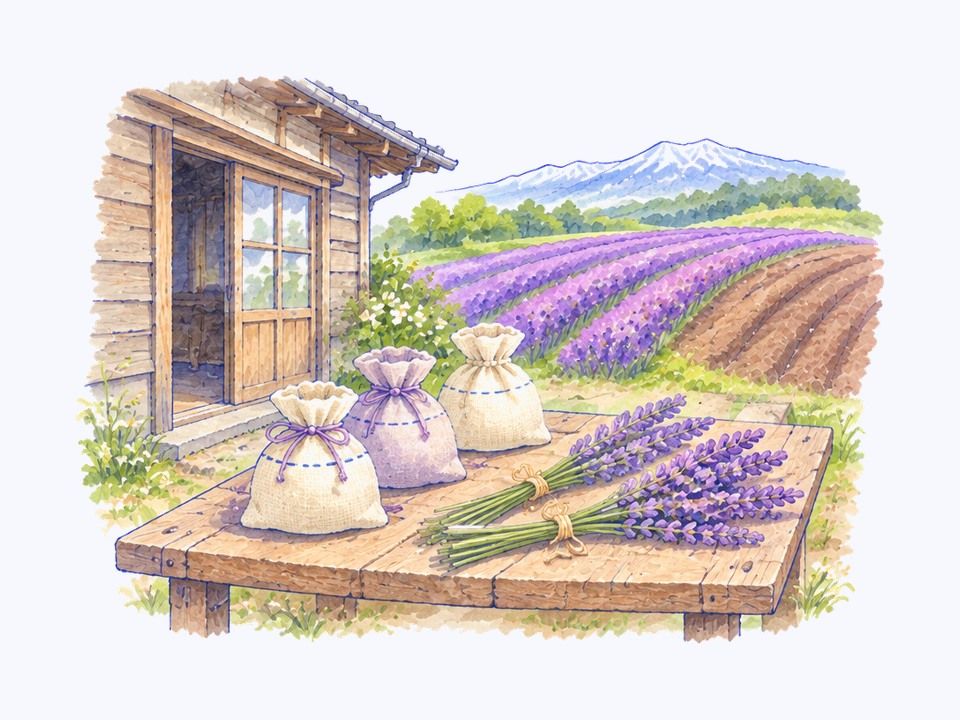
Lift the little sachet:
its bell rings softly.
Full of lavender buds.
50 years ago, nearly gone.
Now, two towns' own flower.
Why Furano lavender is famousA flower that nearly vanished,planted back on the hills together
In the 1970s, fragrance companies stopped buying it. But after the fields appeared on a Japanese National Railways calendar, travellers came, the Tomita family began selling sachets, and neighbouring Kamifurano decided to keep the flower: in 1979, 60 young men and women volunteered to plant about 0.8 hectares of town-run lavender fields. The next year, Hinode Park (日の出公園) also opened 1.5 hectares of fields.
NotebookIt stayed, and not by luck. One family wouldn't let it go, and people in two towns came to see it as their own flower.
Kamifurano's local history, Kyodo o Saguru (郷土をさぐる), Nakafurano town's introduction
Farm Tomita lavender sachetsThe first thing to buy,the sachet that gave the fields a new start
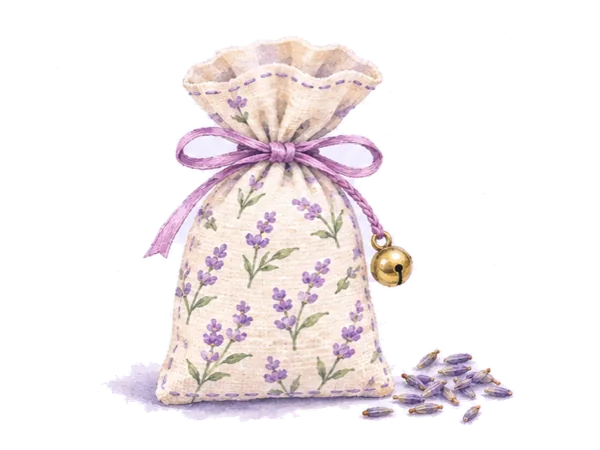
In 1973, the fragrance companies stopped buying, and the lavender on the hills was ploughed into the soil, field by field. Tadao and Sachiko Tomita couldn't bear to lose theirs. They got by on growing rice, thinking "just one more year".
In 1976, their remaining field appeared on a Japanese National Railways calendar, and travellers began to seek it out. The next year, a woman showed them how to make sachets. They filled small cloth bags with buds and sold them at their own door. As long as they earned enough to look after the field, they wouldn't have to plough it under.
Sachets meant the fields didn't rely on selling oilThe fragrance companies set the price of oil, so when buying stopped, the flowers had nowhere to go. Sachets and potpourri (ポプリ) could be sold straight to people who came to see the flowers. The farm's handmade goods started here. From 1980 the farm distilled its own oil, and perfume and soap followed.
- What's special
- The farm's first product, still made as it was then
- In your hand
- About 11 × 6 cm, packed with buds, with a little bell; the fabric patterns vary (you can't choose online)
- Who it suits
- Best as a gift: light and unbreakable, and it scents a wardrobe or bag
- Price
- ¥495
Furano lavender essential oil "Okamurasaki (おかむらさき)"A kilo of lavender,just this small bottle
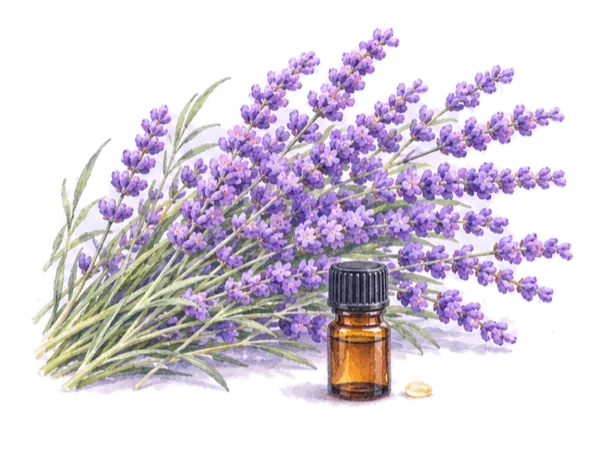
The flowers are cut at full bloom, packed down tight with their stems and steamed. First a white, fragrant cloud fills the workshop, then the oil runs down like a silk thread. 1 kg gives only 6–8 ml, and new oil can't be sold yet: it rests in the dark through one winter so the scent settles.
Cutting the field is caring for next year's flowersCutting is pruning: cut too deep or too shallow, and next year's flowers come up uneven. Well cared for, one plant can live more than 30 years. After distilling, the flowers and stems become compost and go back to the same land. So a cut field is getting ready for next year, and some of the cut flowers become oil.
NotebookThe flower nobody wanted took first place in 1990 at an essential-oil competition in southern France, lavender's home ground. The winner was oil Farm Tomita distilled from Okamurasaki.
- What's special
- The farm's best variety for oil, distilled only at its finest bloom
- Know the name
- Look for "おかむらさき" on the bottle. Lavandin (ラバンジン) is a different kind, and cheaper
- Who it suits
- The flowers look their best for just a month; as oil, the scent lasts all year. For anyone who wants to keep July at home
- Price
- 3 ml ¥1,298, good for a first try; 7 ml ¥2,200, which takes about a kilo of lavender (with stems and leaves)
Farm Tomita's most popular: lavender soapFor every day,a soap cooked for 100 hours
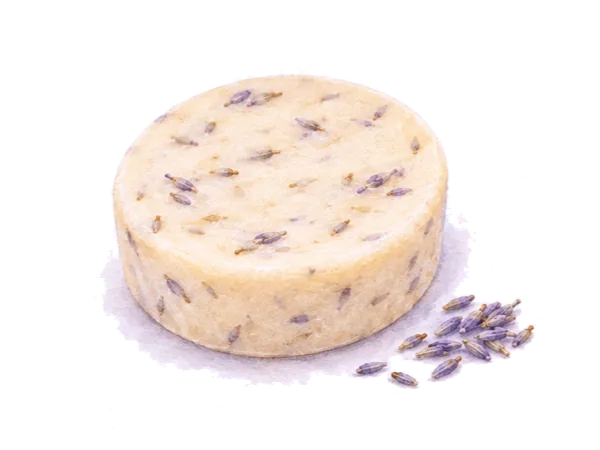
The top seller in the official online shop isn't the oil; it's this bar. The soap base is cooked in a pot for 100 hours, then lavender oil and buds are kneaded in. Natural and additive-free, each bar differs a little in colour and shape. It smells of lavender itself, with no synthetic fragrance or colouring.
One distillation, two scentsThe oil floats on top; below it is the floral water. The floral water isn't weak oil: it smells more like grass. 1 litre is ¥1,056, and the official advice is to start with 100 ml in a bath.
- What's special
- The 100 g bar contains only soap base, essential oil, flowers and vitamin E (the small bar also has water and a chelating agent)
- Who it suits
- Anyone who'd never finish a bottle of oil, or who wants to think of Furano every time they wash their hands
- Price
- Small bar ¥533, 100 g ¥858
Farm Tomita dried lavenderTo take the purple home,buy flowers not yet fully open
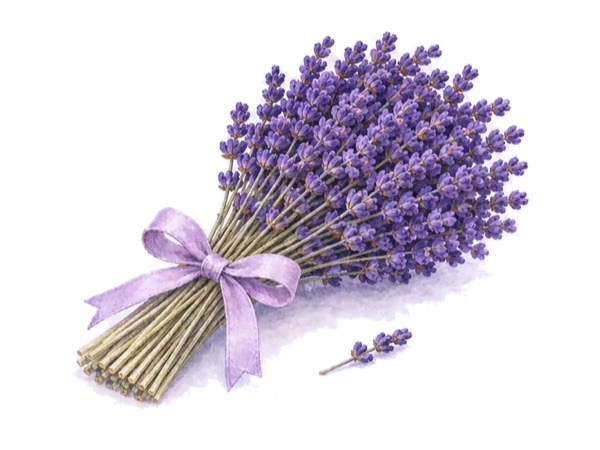
Flowers for oil wait until they're fully open; flowers for bunches are cut stem by stem when only 20–30% open. After drying they're sorted and tied by hand: the official site has featured someone with more than 30 years' experience who grabs exactly the right size in one go, without measuring.
- What's special
- Bunches use Noshi Wasezaki (濃紫早咲), a vivid ornamental variety
- Who it suits
- Anyone who wants the flowers themselves at home; if you're worried about crushing them, choose the boxed one
- Price
- Boxed ¥649, a bunch of about 80 stems ¥973
Farm Tomita souvenirs under ¥500Gifts for lots of people,some for ¥500 or less
- Lavender bath balls, 2¥297Squeeze one in the bath and the water turns milky white
- White soap, small¥429Plant-based with essential oil, a fresh wash
- Clear soap, small¥473Not a sweet scent, and skin feels less dry
- Lavender sachet¥495The best story, and the hardest to break
All prices are tax-inclusive from the official online shop (22 Nov 2026); in store, the shop's price applies.
Where to buy Farm Tomita souvenirsWatch them made at the farm,with some at the airports too
- At the farm
- Joryu no Ya (蒸留の舎): you're most likely to see distilling from late July to mid-August. Kosui no Ya (香水の舎): watch perfume and soap being made through the glass
- Furano
- Argent (アルジャン), the produce centre at Furano Marche (フラノマルシェ), and the shop at the New Furano Prince Hotel
- Sapporo
- Hokkaido Shiki Marche (北海道四季マルシェ) (Stellar Place at the station, COCONO SUSUKINO), and the bakery on 1F of Sapporo Grand Hotel
- Airports
- Craft Studio (クラフトスタジオ), 2F, New Chitose domestic terminal (flying international? Go there before heading to your terminal), and Point Seven (ポイントセブン), 2F, Asahikawa Airport
Based on Farm Tomita's list of stockists. Shops elsewhere may not have everything.
Taking lavender souvenirs home to TaiwanThe scent can travel;declare anything with flowers
Dried flowers need no quarantine application, but you still declare them in the red customs channel. Sachets aren't on the official list: declare them too and let staff decide; seeds, soil or insects may mean you can't bring them in. 3 ml and 7 ml oils can go in your hand luggage in a liquids bag; anything over 100 ml goes in checked luggage, and ask your airline first about its rules on flammable items.
Lavender timeline: from fragrance crop to two towns' flower
- 1952Nakafurano starts growing it as a fragrance crop
- 1958Tadao and Sachiko Tomita start with 10 ares
- 1970The peak: about 250 households and over 230 hectares around Furano
- 1973Buying of the Tomitas' oil stops; fields disappear one by one
- 1976The remaining field appears on a railway calendar, and travellers come
- 1977Sachets go on sale at the door
- 197960 young people in Kamifurano plant town-run fields
- 1980The farm starts distilling its own oil again
- 1981Becomes Kamifurano's town flower
- 1986Becomes Nakafurano's town flower
- 1990The oil wins first place at a competition in southern France
- 2022Given the title "Lavender Commander" in southern France
More Furano souvenirs: wine, cheese and jam
Wine: a city-run winery that began on Yamabe's stony ground
In the years the lavender fields were looking for a way to survive, Yamabe's stony ground was trying something new too.

Furano Wineふらのワイン
In 1972, the city set up a grape research institute, hoping wine would boost farming; the next year it began trial vines on Yamabe's stony ground. The winery is still city-run today.
GrapesAll grown in Furano
Only hereCrossing local wild mountain grapes with the French variety Seibel 13053 produced "Furano No. 2 (ふらの2号)", made into the red "Higuma no Banshaku (羆の晩酌)"
This yearThe new wine went on sale on 18 Nov, in limited numbers
NotebookFor a bottle with Furano's wild mountain grapes in its blood, choose Higuma no Banshaku: a little sharper, a little wilder.
Cheese: Furano red wine in the marbling
The grapes became wine, and the wine went into the milk.
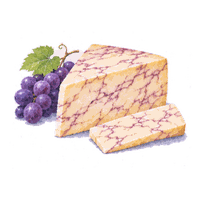
Wine cheddarワインチェダー
In 1982, Furano City and Rakuno Gakuen University developed it together: Furano red wine adds colour and aroma, which gives it a marbled pattern.
Made fromFurano milk and red wine
Sizes3 packs of 40 g, or a 225 g round
Also trySquid-ink camembert "Sepia (セピア)": the black is Furano's soil, the white is snow. There's also an onion cheese mixed with roasted onion
NotebookIf you take just one food, I'd choose the wine cheddar: one piece holds a vineyard and a pasture.
Jam: Rokugo (麓郷) carrots that couldn't be shipped, cooked into jam
Like the lavender, one Rokugo harvest couldn't find a buyer.

Rokugo's jamふらのジャム
In 1974, five young people began clearing this slope, which had been given up as unfit for farming; later only one of the founders remained. That founder's spouse, seeing fields full of carrots that couldn't be shipped because of their shape, thought it a waste and looked for another use. The jam went on sale in 1983, and the jam garden opened in 1986.
MethodNo added water, only the ingredients' own juice
Flavours38 kinds. Check each jar's label for where it's from
Most popularHaskap (ハスカップ, blue honeysuckle)
NotebookLike the lavender, it had no market at first, then took a new form: carrots too odd-looking to ship left Rokugo as jam.
Furano's four specialities: when to buy them in winter
Now that you know how they came about, here is where to buy them and when they close.

Cheese factoryCheese
WinterNov–Mar 9:00–16:00
Closed31 Dec–3 Jan; Mondays in January and February; Mondays in the first three weeks of March (notice of 30 Oct)
Before you goFree entry
WineryWine
Winter9:00–17:00, except over New Year
Closed26 Dec–5 Jan; also 10, 17, 24 and 31 January (all Sundays)
Before you goDrivers shouldn't taste
Furano MarcheEverything in one stop
Winter10:00–18:00; may close early over New Year
Closed31 Dec, 1 Jan; the Ogaru (オガール) farm shop closes on Tuesdays, Nov–Mar
Before you goAbout 7 minutes' walk from the station
Jam gardenRokugo
WinterDecember 10:00–16:00; from January, check before you set out
Closed28 Dec–1 Jan
Before you goAbout 30 minutes' drive from town; by bus about 45 minutes to Rokugo, 4 a day, then about 40 minutes' walk. Not recommended in winter
Farm TomitaNakafurano
WinterVaries by day, e.g. 9:30–16:30 on 22 Nov 2026
ClosedEach day's hours are on the website's home page
Before you goCheck the website for which buildings are open
Tap a shop name for details. Hours are as of 22 Nov 2026.
From Furano Station: market, cheese and wine
String the shops together into one route.
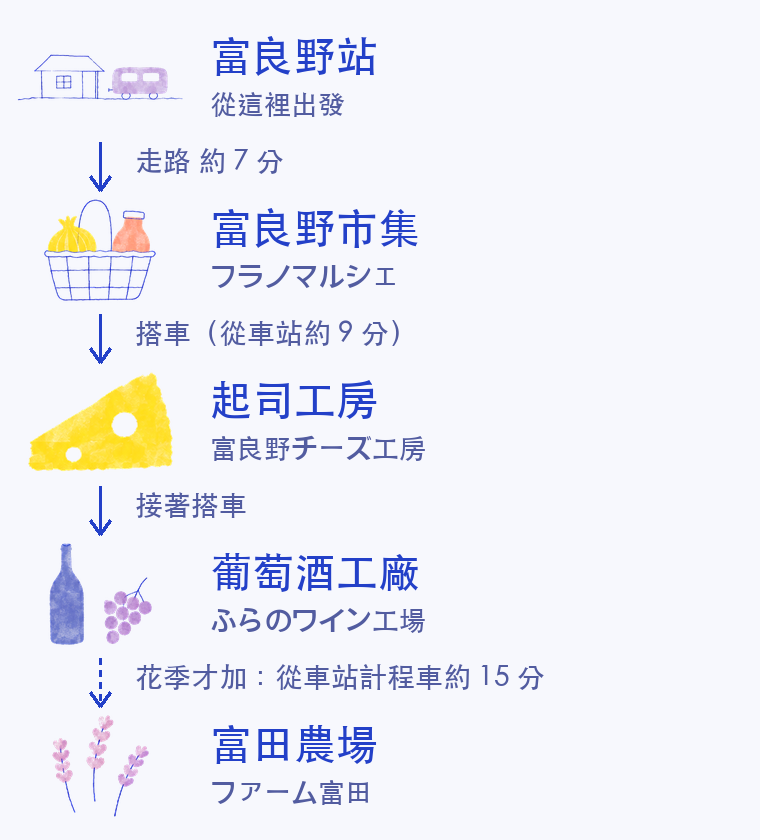
- Walk firstFurano Station to Furano Marche takes about 7 minutes: buy bread, have a drink, and compare souvenirs
- Then by carThe cheese factory is about 9 minutes by car, 3.4 km from the station; then go on to the winery
- Add in flower seasonFarm Tomita in Nakafurano, about 15 minutes by taxi from Furano Station
NotebookIn winter you don't need all four. Set off before 13:00, browse the market, add one workshop, and you'll be back before dark at 16:00.
Lavender, wine, cheese, jam: taking them home to Taiwan
Read this before you buy, not at the airport.

NotebookThe melon you most want to take home is the one customs won't let through. Eat the fresh things on your trip; pack only what's been cooked, brewed or dried.
Furano action listWant to go?Here's what to do next
- How long
- Flowers plus shopping: allow 1–1.5 hours
- Go first
- From late July to mid-August, see Joryu no Ya first, then shop
- Out of time?
- New Chitose domestic terminal, Asahikawa Airport and Sapporo all have some
- Getting there
- Farm Tomita without a car →
Open your suitcase,
and the bell rings again.
In your room: Furano in July.
Read next
 Furano's table: asparagus in spring, onions in winterWhat to eat in Japan, and when it's best→
 Chitose, beside the airport: why is it home to salmon?Salmon souvenirs for the day you fly home→
 Stay a night in Furano and take a morning walk by the fieldsWhich day to go shopping→
 Snow covers the fields: where can you still buy farmers' vegetables?Vegetables and farm goods→
Sources: 17
- Farm Tomita: history
- Furano Wine: history
- Furano Cheese Factory: products
- Furano Jam Garden: jam workshop
- Furano Cheese Factory: winter closures (30 Oct)
- Furano Jam Garden: history
- Furano Cheese Factory
- Furano Nosan Kosha: ingredient origins (Japanese)
- Furano Wine
- Furano Bus: Rokugo Line (Japanese)
- Furano Jam Garden
- Hokkaido Shimbun: how the jam garden began (Japanese)
- HOKKAIDO LOVE!: the jam garden
- Farm Tomita
- Furano Marche
- BAPHIQ: traveller quarantine reference table (27 Jul 2022, Traditional Chinese)
- Ministry of Finance: inbound baggage rules and schedules (Traditional Chinese)
This article mainly draws on: Town of Kamifurano / Town of Nakafurano / Farm Tomita: history / how the sachet began / soap / how the oil is made / how dried flowers are made / products