2026.11 Furano, Hokkaido Research notes before a first winter
In Furano, with 4 metres of snow a year,who clears the snow at your door? Winter living: snow clearing, kerosene and keeping pipes from freezing
You cleared your doorway early.
The snowplough went past
and left a ridge of snow.
In Furano,
that ridge is yours.
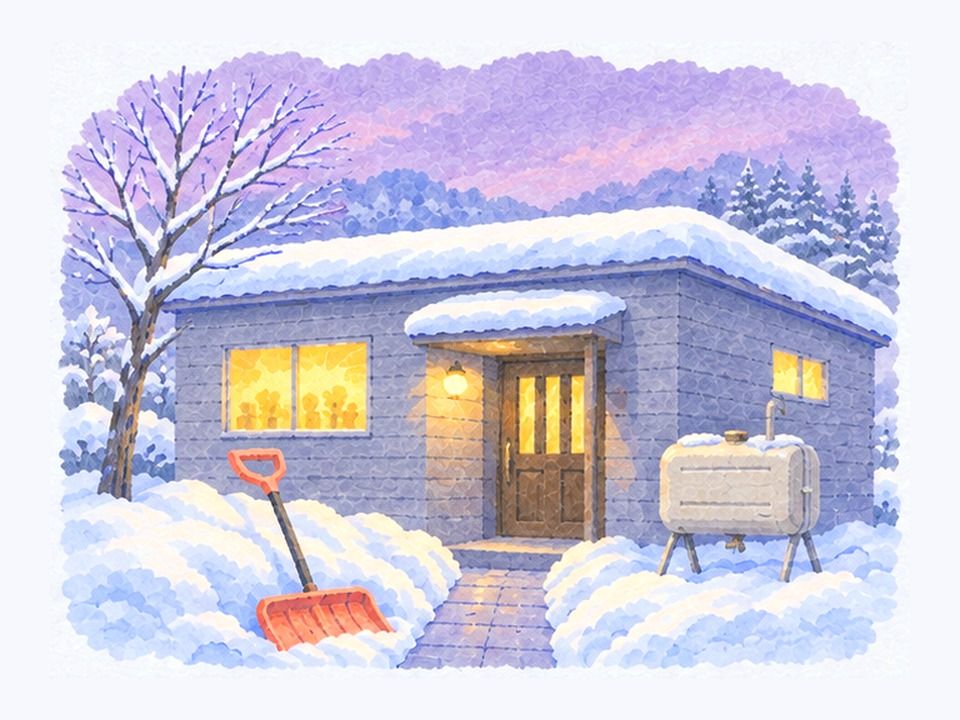
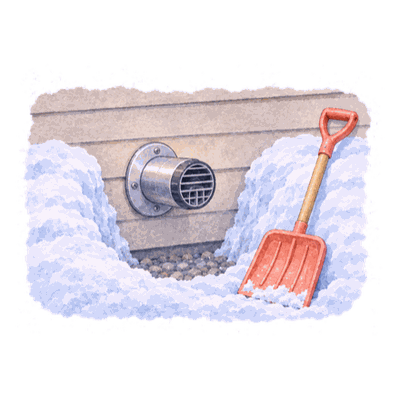
The snow at your door,you clear it yourself.Push what the plough leaves to the roadside, and keep the snow from your own yard in your yard. Neither goes into the middle of the road. After heavy snow, check the heater's vent first.
Why the snowplough leaves snow at your door
It isn't personal.
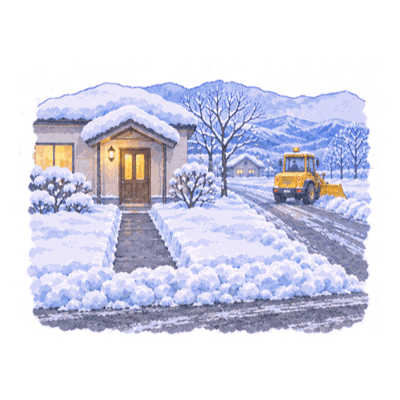
It can only push to the sidesFurano's snowploughs push the snow "to the left and right of the road", so a ridge is left in front of every entrance and garage.
Back again just after you've clearedOn the same morning, some roads are cleared at 5:00 and others at 7:00. The city office says plainly that it can't match every household's schedule.
What to do with the ridgePush it to the roadside, not into the middle of the road. Snow from your yard and parking space stays on your own land.
CarsDon't park on the road: the plough can't get past, and your car may get scraped. For city roads, ask your neighbourhood association head to pass comments to the city's Urban Facilities Section. For national roads call 0167-23-3171; for prefectural roads (run by Hokkaido) call 0167-23-2168.
NotebookClear the vent and the path in and out first, and leave the last ridge until the plough has been. On days the plough comes late, you don't have to keep waiting.
When the snowplough comes in Furano, and how much snow it takes
Not every snowfall brings it.
How much falls in a year408–514 cm (Japan Meteorological Agency, five winters from 2020–21 to 2024–25). This is the season's total, not the depth on the ground. The city office says snow in town is about 1 metre deep; over these five winters the deepest at the station was 63–119 cm.
When it goes outWhen snow keeps falling and 10 cm of fresh snow has built up, or when ruts, a thaw, rain or wind-blown drifts make the roads worse.
When it should be finishedThe aim is for main roads and footpaths to be usable by 7:30, and other residential roads cleared by 9:00. On days when it keeps snowing, it will be later.
At nightThe city newsletter says there is no night work from 21:00 to 3:00, even if the roads get worse.
Notebook7:30 is the time for the road, not the time for your doorway. On mornings you need to go out, allow 30 minutes to clear your own entrance.
Where you can put snow in Furano
Snow you shovel can't be dumped just anywhere.
Residents' snow dumping sitesIn 2025–26 there were three: Gojo Ohashi (五条大橋, small and medium vehicles under 4 tonnes only), Furano Ohashi (富良野大橋, large vehicles of 6 tonnes or more only) and Yamabe (山部, Yamabe residents only). 15 Dec–20 Mar, 9:00–17:00; from 31 Dec to 3 Jan, register first at the city office's duty desk. For this year's sites and vehicle types, ask the Urban Facilities Section (0167-39-2313).
Don't dump it in the riverThe river may overflow and flood areas downstream, and if you remove the riverside fence to dump it, you may fall in.
Don't push snow into parks with machinesPlay equipment can't take the weight of piled-up snow: a swing frame in Higashimachi children's park has been bent, and so has a slide in Yayoicho children's park.
Snow that falls from roofsIf it lands on the road or footpath, the building's owner must clear it. Left alone, it blocks the way and causes trouble for neighbours. If you rent, tell your landlord straight away.
NotebookWhen viewing a house, look for open space first: can this yard hold a whole winter's snow? If not, you'll need a vehicle to take it to a dumping site like Gojo Ohashi, or pay someone to haul it.
How much kerosene costs a month in a Furano winter
More often than the thermometer, you'll be checking the tank gauge.
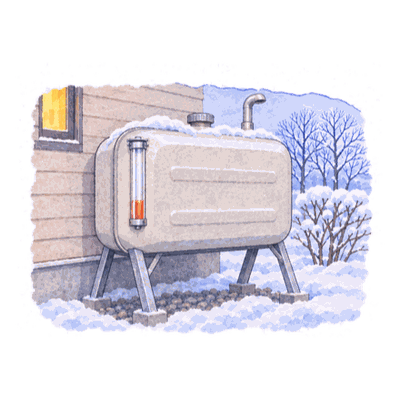
Per monthWith a kerosene heater, the city office estimates ¥15,000–30,000, depending on whether it is a flat or a house. If the heater runs all the time and a tank lasts two months, at today's price that is about ¥39,000 a month.
Running all the timeA 490-litre tank empties in about two months.
Today's priceThe Hokkaido average delivered price is ¥160.1 a litre (16 Nov 2026). At this price, filling a tank costs about ¥78,400.
Oil leaksPiled snow and snow falling from the roof can crush the oil pipe. If use suddenly rises or you smell oil (it can leak without a smell too): turn off the heater and the tank valve, catch the oil in a container, don't wash it away with water, keep away from flames, and tell Furano Fire Station (0167-23-5119) and your supplier. If there is a fire, call 119.
NotebookDon't budget on the monthly average alone. Keep the price of a full tank, about ¥80,000, set aside: one delivery may mean paying that much at once.
Keeping Furano pipes from freezing: draining water before bed
At −4°C, it's time to start draining.
When to do itWhen it is −4°C or below outside, when days that stay below zero all day come one after another, before bed, and when you're away for several days. Pipes freeze most from December to March.
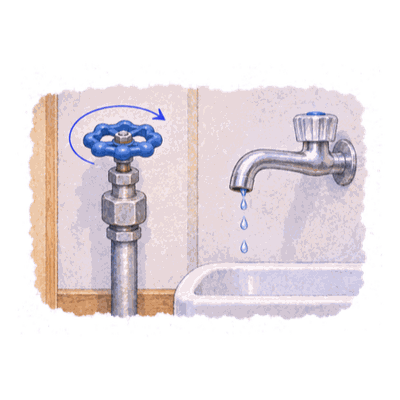
DrainingTurn off the taps first. Turn the mizunuki-sen (水抜栓, drain valve) all the way to "止" (stop) or "水抜" (drain), then open every tap, including the one that lets air in, and wait until the water has run out. Empty the toilet cistern too. Every home is built differently, so follow what your landlord shows you.
When you need waterFirst check that every tap (including the air one) is closed, then turn the drain valve back. Otherwise water may spray out and flood. Drain the water heater separately, following its manual.
Already frozenWrap the pipe in a towel and slowly pour warm water over it. Don't use boiling water or a flame. If a pipe cracks or leaks, first close the drain valve or the main stopcock, then call a contractor approved by the city. If you don't know how to close it, call the Water and Sewerage Section on 0167-39-2317.
NotebookThe valve is in a different place in every house. On the day you sign, ask your landlord to turn it once in front of you, and record it.
After heavy snow in Furano, check the vent: carbon monoxide and falling snow
More urgent than your doorway is that pipe on the wall.
Buried fluesA warning from another Hokkaido city: if the pipes of an FF heater or water heater are buried or crushed by snow and still in use, carbon monoxide can flow indoors and may kill.
Sudden shut-offIf there is enough oil but the heater goes out or won't light, don't try to light it again. Turn it off and check the pipe outside. If it is buried or damaged, stop using it. Take care not to damage the pipe when clearing snow. If it is damaged, or still not right after clearing, call a contractor.
Headache, nausea, alarmIf you get a headache, feel sick or dizzy while the heating is on, or the carbon monoxide alarm sounds: everyone goes outside at once and calls 119 from outside. Turn off the heating and open windows only if it doesn't slow your escape. The fire service says not to go back in until it is safe; if someone has collapsed inside, leave them to the fire service too. Carbon monoxide has no colour or smell.
Roofs and eavesDon't stand under the eaves, especially when it clears and warms up. For snow on the roof, ask your landlord or a contractor first; newcomers shouldn't go up themselves. If you really must: two people or more, a helmet, a harness and lifeline, a secured ladder, and a phone.
Car exhaustsClear the snow around the exhaust before starting the engine. If the car is buried in snow, turn off the engine; opening a window a little doesn't make it safe. Don't start a car or snowblower inside a garage or shed either.
Getting around a Furano winter without a car
Bicycles rest until spring.
In townWalk. The city office says plainly that you can't get around by bicycle in winter.
Furanori (ふらのり)A shared ride you book ahead: register first; a ride is usually ¥400. It runs only on weekdays, 9:00–12:00 and 13:00–16:00, and stops on weekends, public holidays and 30 Dec–3 Jan. To book by phone, you must hand in an application form first; phone 0167-22-8177 (weekdays 8:00–16:00).
Mornings after heavy snowMain roads and footpaths come first, so residential roads may still not be cleared after 9:00. Leave some extra time before appointments.
NotebookWithout a car, first walk the footpaths from your home to the supermarket and Furano Kyokai Hospital (富良野協会病院) once. Furanori finishes at 16:00, so you can't rely on it in the evening or at weekends.
Your first week living in Furano: five things to ask your landlord
First find out who does what, and where.
① Snow clearingIs the parking space and doorway included? Where does everyone move their cars?
② Piling snowWhich patch is mine for my snow?
③ KeroseneWho orders the oil, and is the tank shared with other homes?
④ PipesWhere is the drain valve, and how do I drain the water heater?
⑤ VentWhich wall is it on? Could snow from the roof fall on it?
NotebookFurano can get as cold as −30°C, but what you face every day is snow. First get it clear: city roads and footpaths belong to the city, your doorway belongs to you. 7:30 and 9:00 are the city's targets; plan your own time for the stretch by your door.
FAQ
Will Furano's snowplough clear up to my door?
No. The city clears city roads and footpaths; snow left in front of entrances and garages is up to each household.
Do I have to shovel snow every day?
No, it depends how much falls. Some days can bring tens of centimetres: check the vent first, then clear the way in and out and your doorway.
What do households use to clear snow?
The city office says the most common is the mama-san dump (ママさんダンプ): a large snow scoop you push with both hands. Households with large areas also use snowblowers. If snow jams, switch off first and clear it with a stick, never with your hand; don't tie down the safety device; keep people away; don't start it indoors.
What if only older family members live at home and they can't shovel?
Households of people aged 65 or over with no relatives who can help, households with a disabled member, and others can ask the city about its snow-clearing helpers (josetsu helper, 除雪ヘルパー). From November to the end of March, when 15 cm or more falls, they clear a path from your door to the road. You pay 10% (¥2,500 a season in FY2025). Senior Welfare Section: 0167-39-2255.
Notebook notes are suggestions drawn from research, not first-hand experience. The cost of a full tank uses the average price at the time. Snowfall is counted by winter season, and the dumping sites are those announced for last winter. Amounts and rules change, so check official sites.

 Life, work and moving
 You love Furano in summer. Could you live through its winter?What to think about before moving→
 After the autumn harvest, can you stay on in Furano and work?Winter work→
 Furano at minus twenty: what to wear outsideWhat to wear for shovelling→
 Never driven on snow? Should you drive yourself to Furano?If you plan to drive→